EN
Spring Patio · Futian
春台 福田
2025
#138
项目:春台 福田
地址:深圳福田区平安金融中心南塔地面一层
类型:室内设计
面积:170㎡
年份:2025
摄影:Finn Chiu
Project: Spring Patio · Futian
Location: Ping An Finance Center South Tower, Futian, Shenzhen
Type: Interior Design
Area: 170㎡
Year: 2025
Photography: Finn Chiu
本案延续春台品牌“Spring Patio”的命名灵感,将“Patio House”作为核心概念,提出一种更具建筑性与雕塑感的空间构建方式。区别于常规餐厅的内部装饰逻辑,我们更像是在建造一栋“可被生活的房子”,在城市玻璃壳体中,创造一个自成体系的饮食居所。
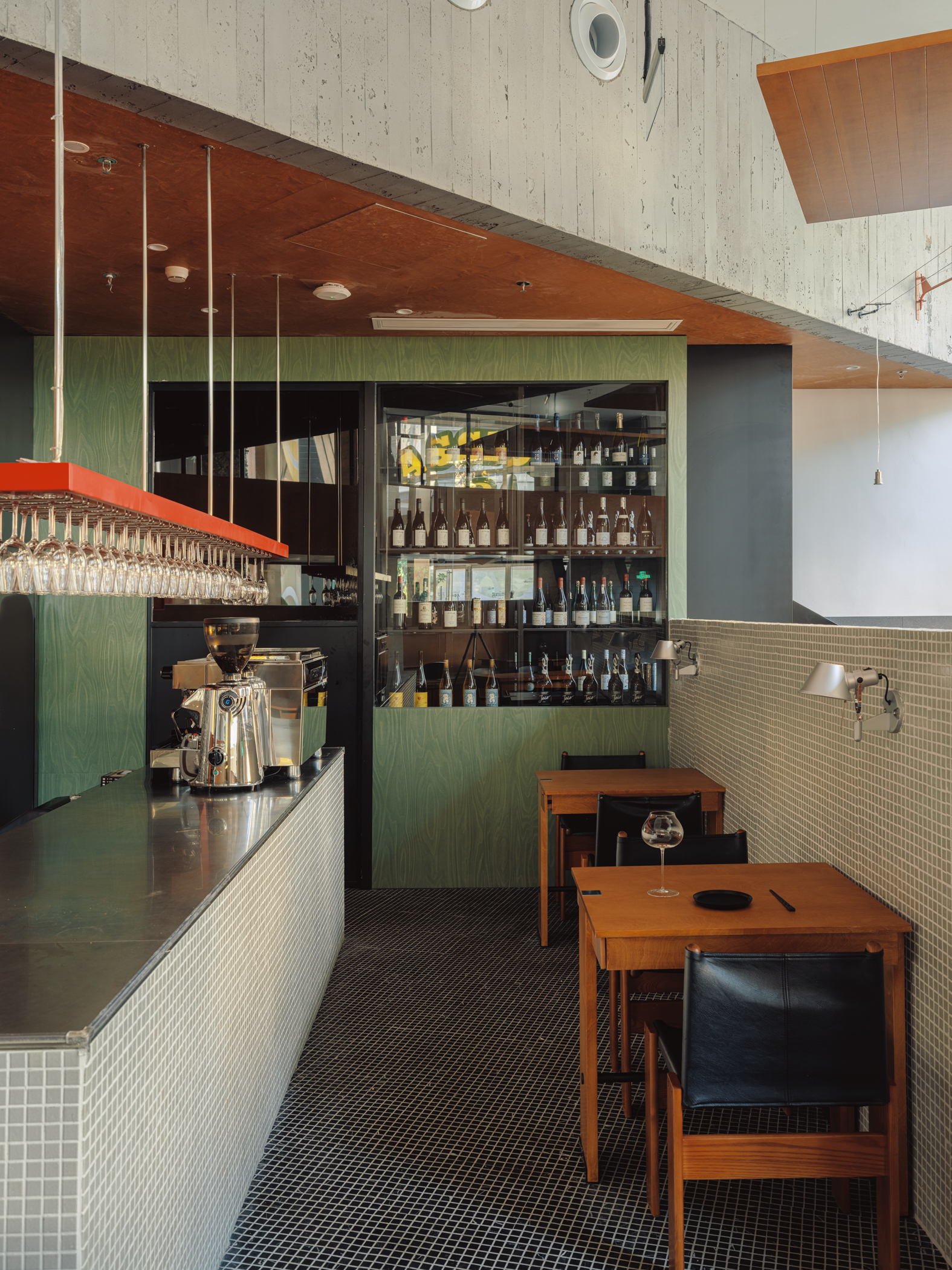
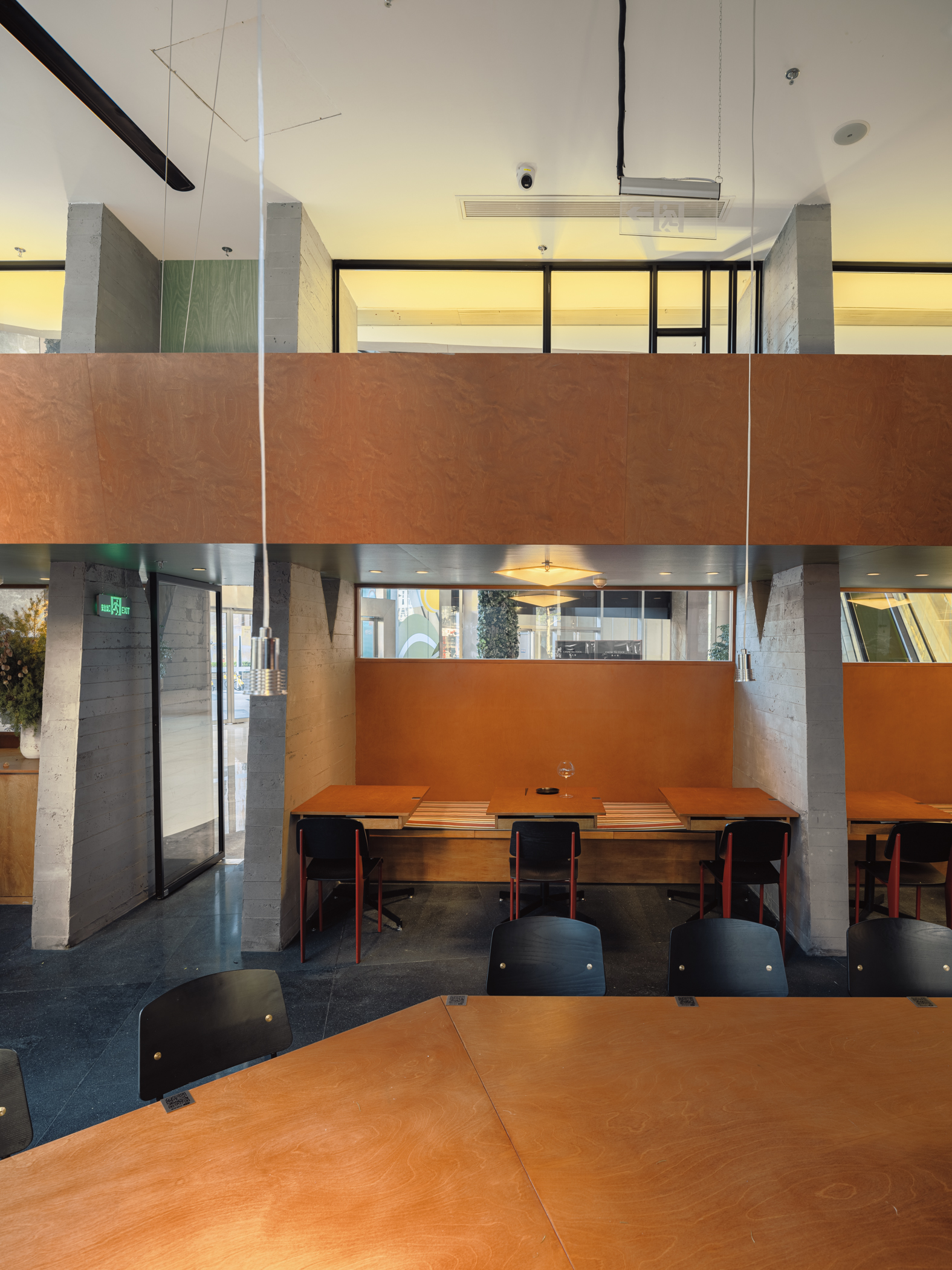
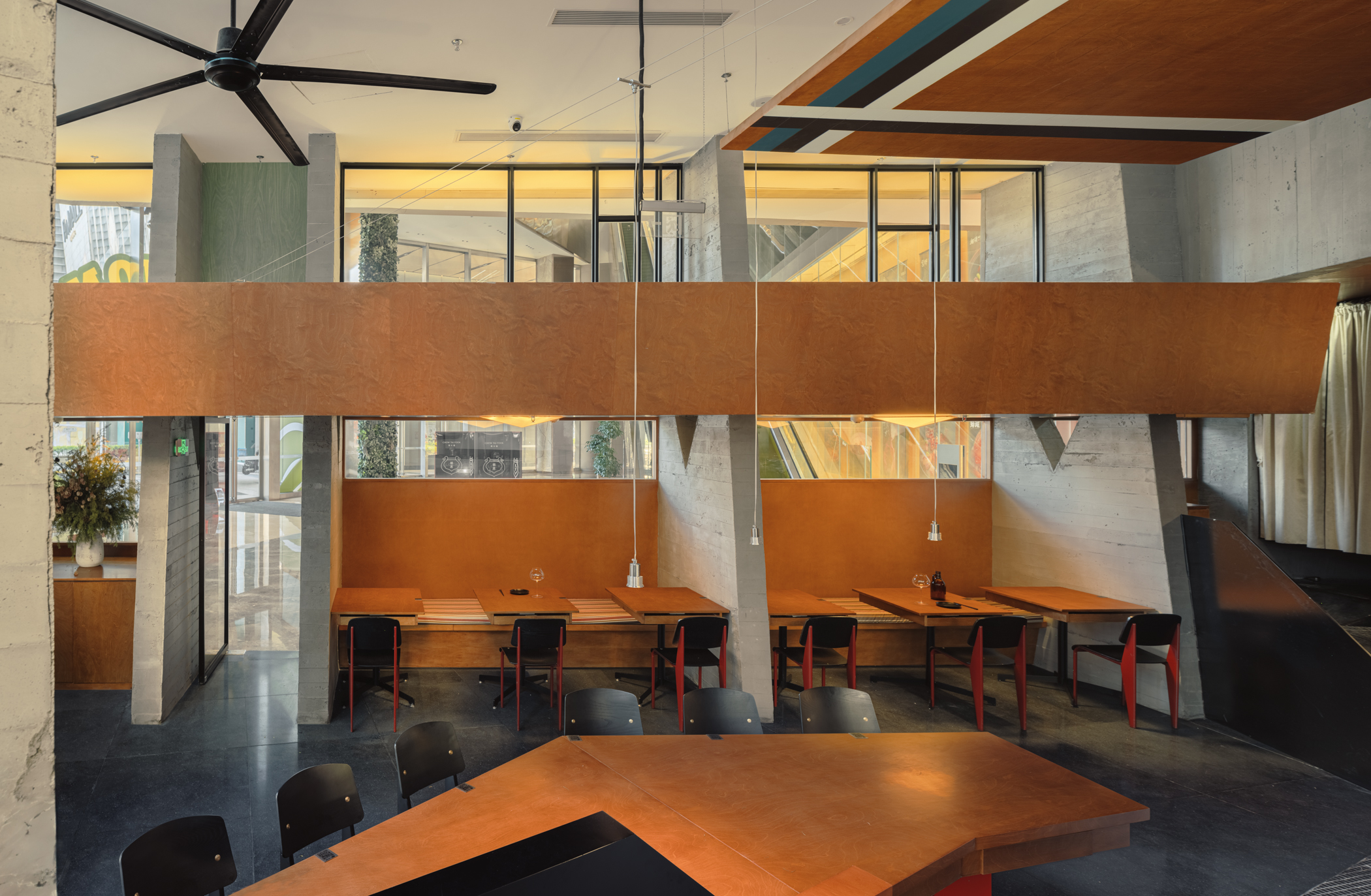
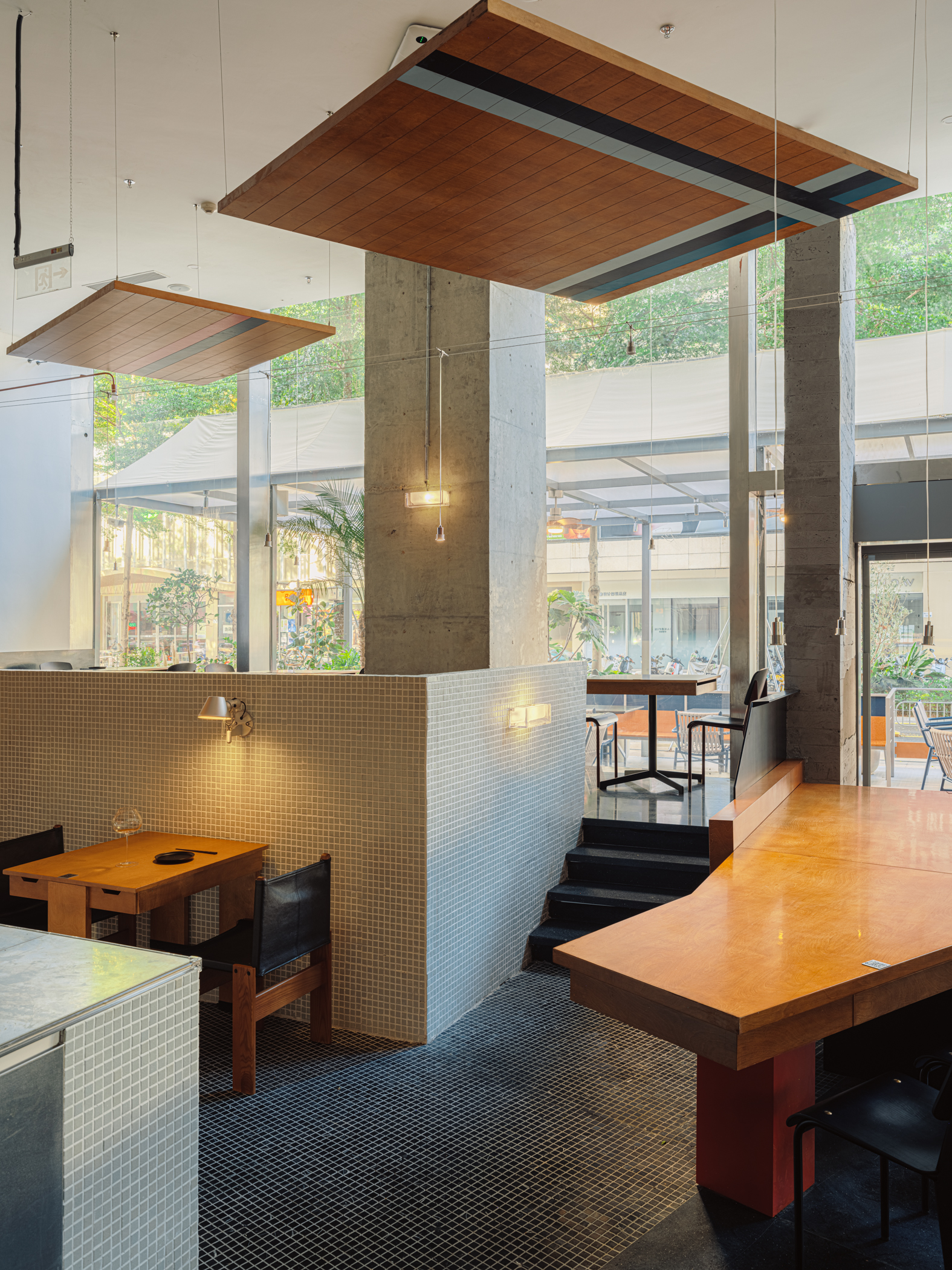
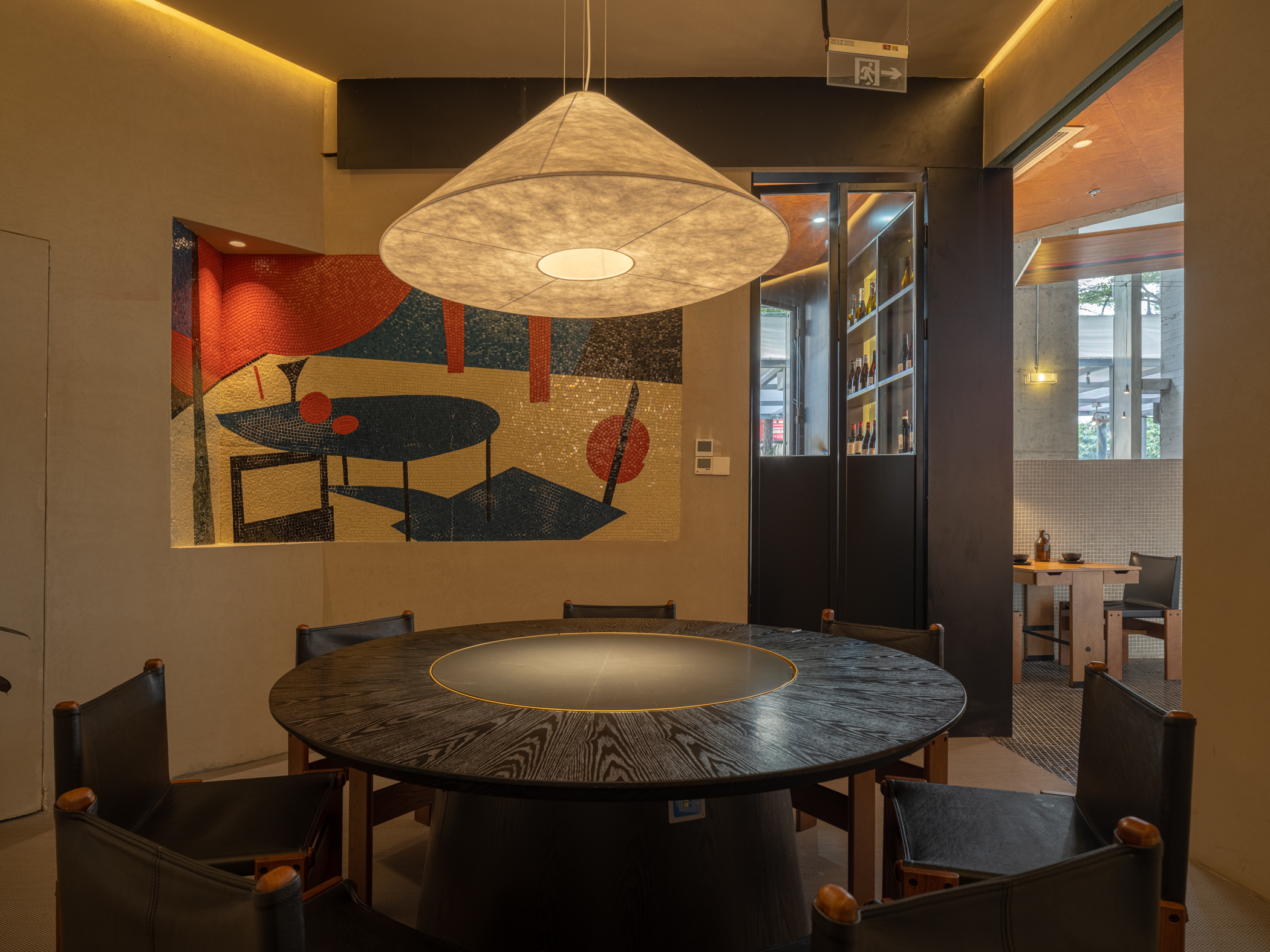
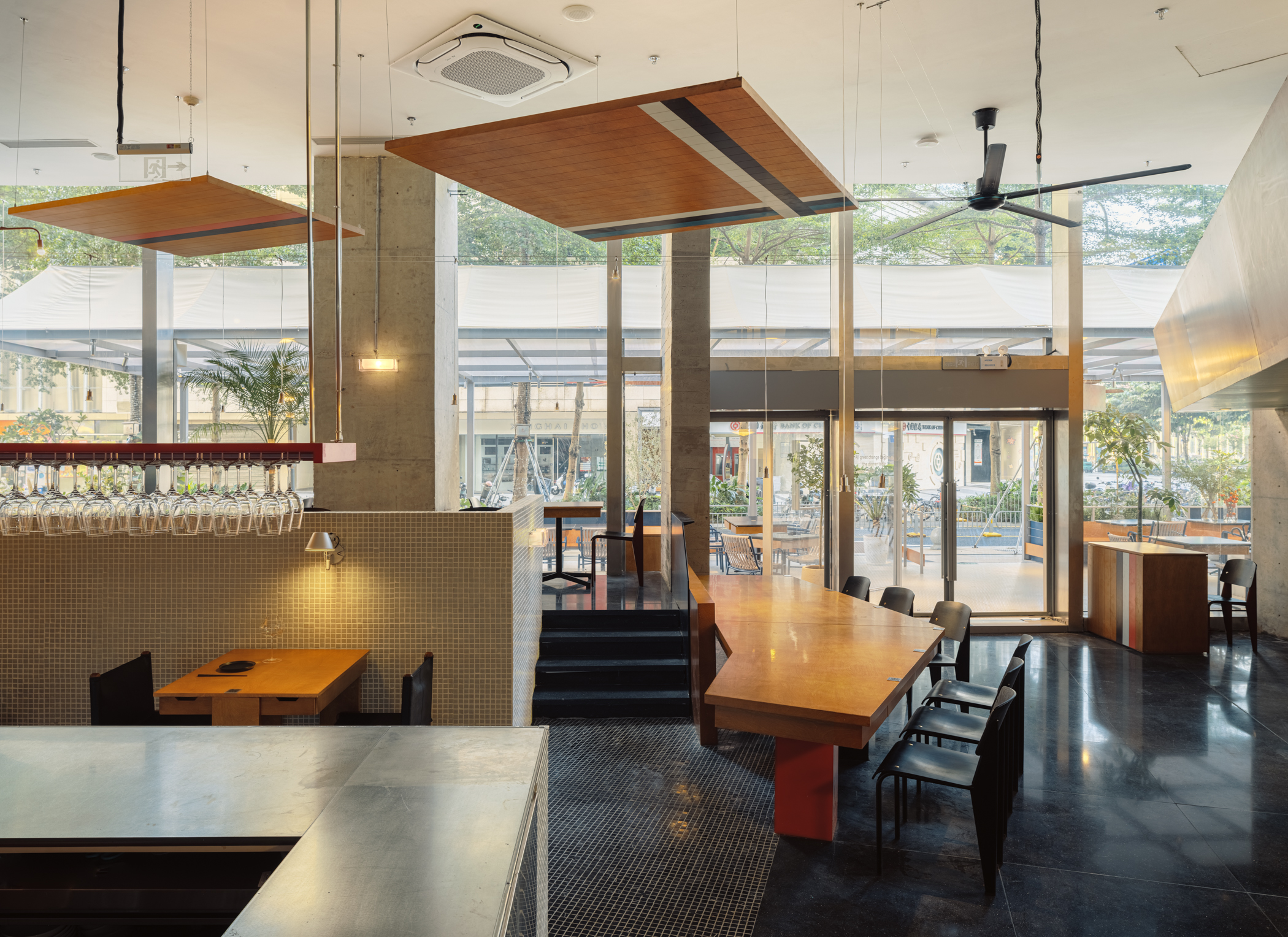
我们在有限的平面条件下,构造出一个具有高低变化与动线层次的空间系统。靠窗一侧的客座区整体抬升,形成与外部街道的视觉错位与对望;这一抬升空间之下,是一个下沉的“酒窖”空间,入口低调隐蔽,强调仪式感。酒窖内部可穿行至包间,再从包间回到主厅,形成一个顺畅的环形流线,增强整体的游走感与空间体验。
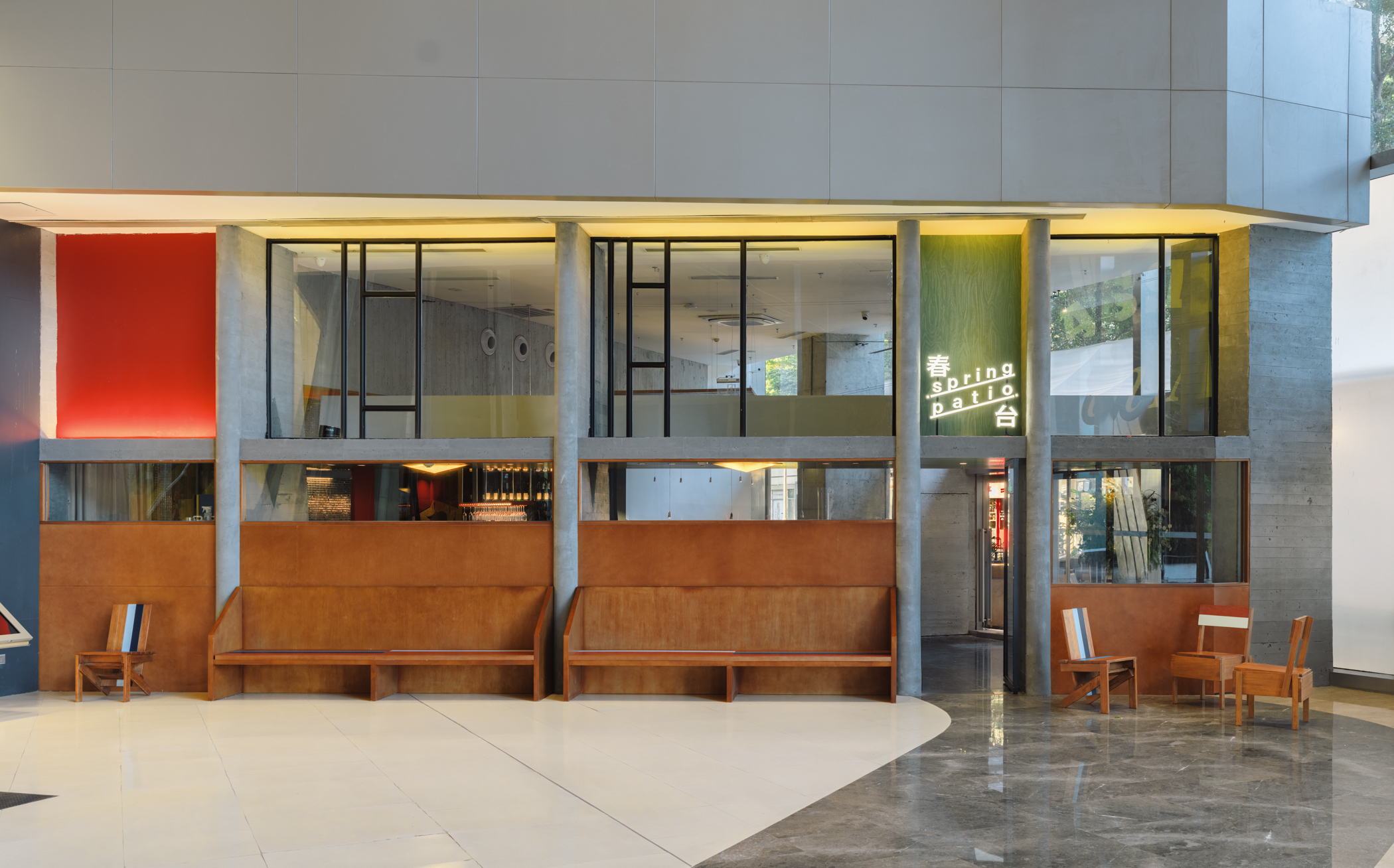
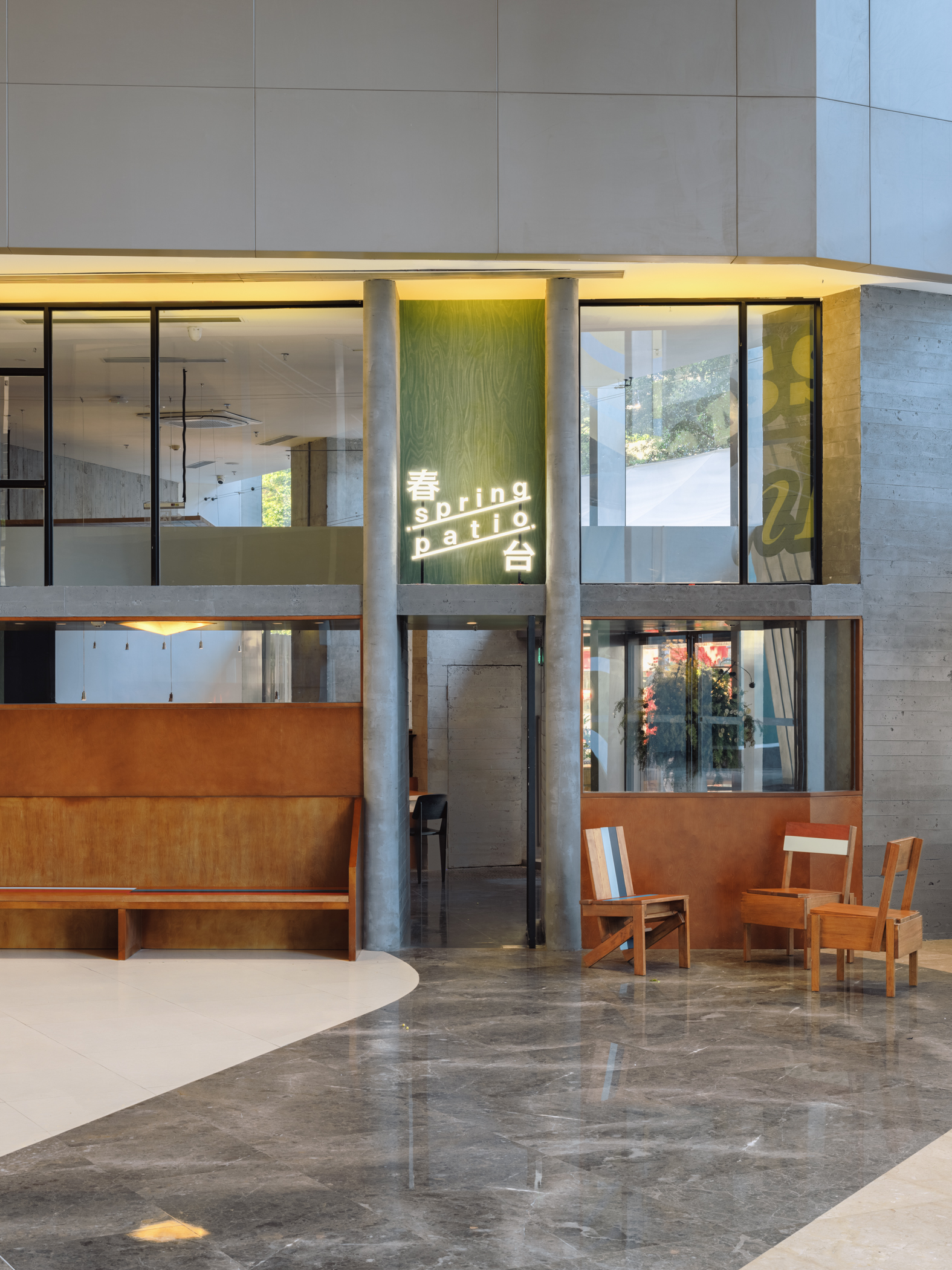
入口立面以明确的框架和厚重体块构成,弱化传统商业立面的符号感,强调建筑性。结构成为视觉主角,使空间在城市中获得某种“独栋”的存在感,也呼应 house 的独立特质。
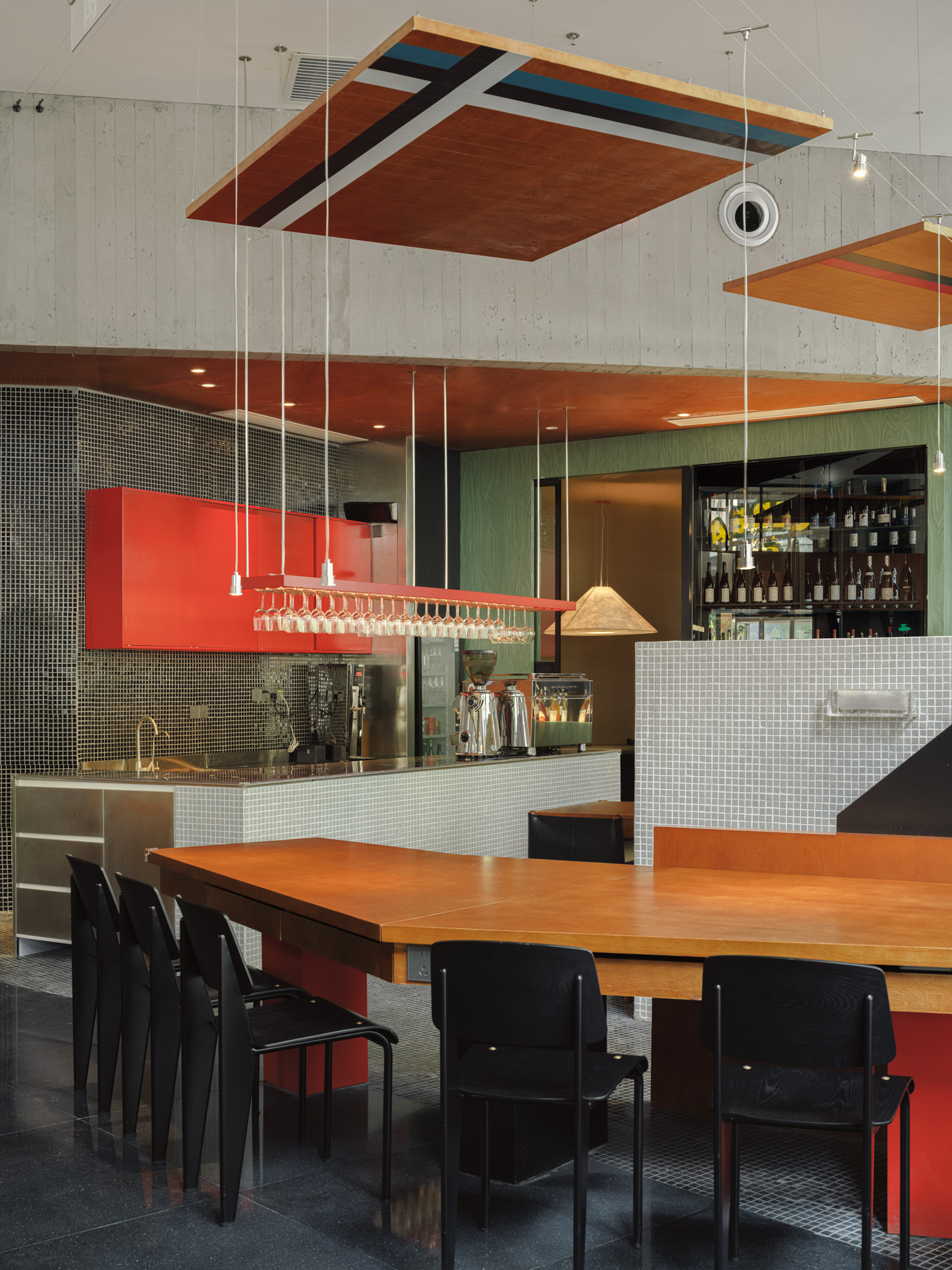
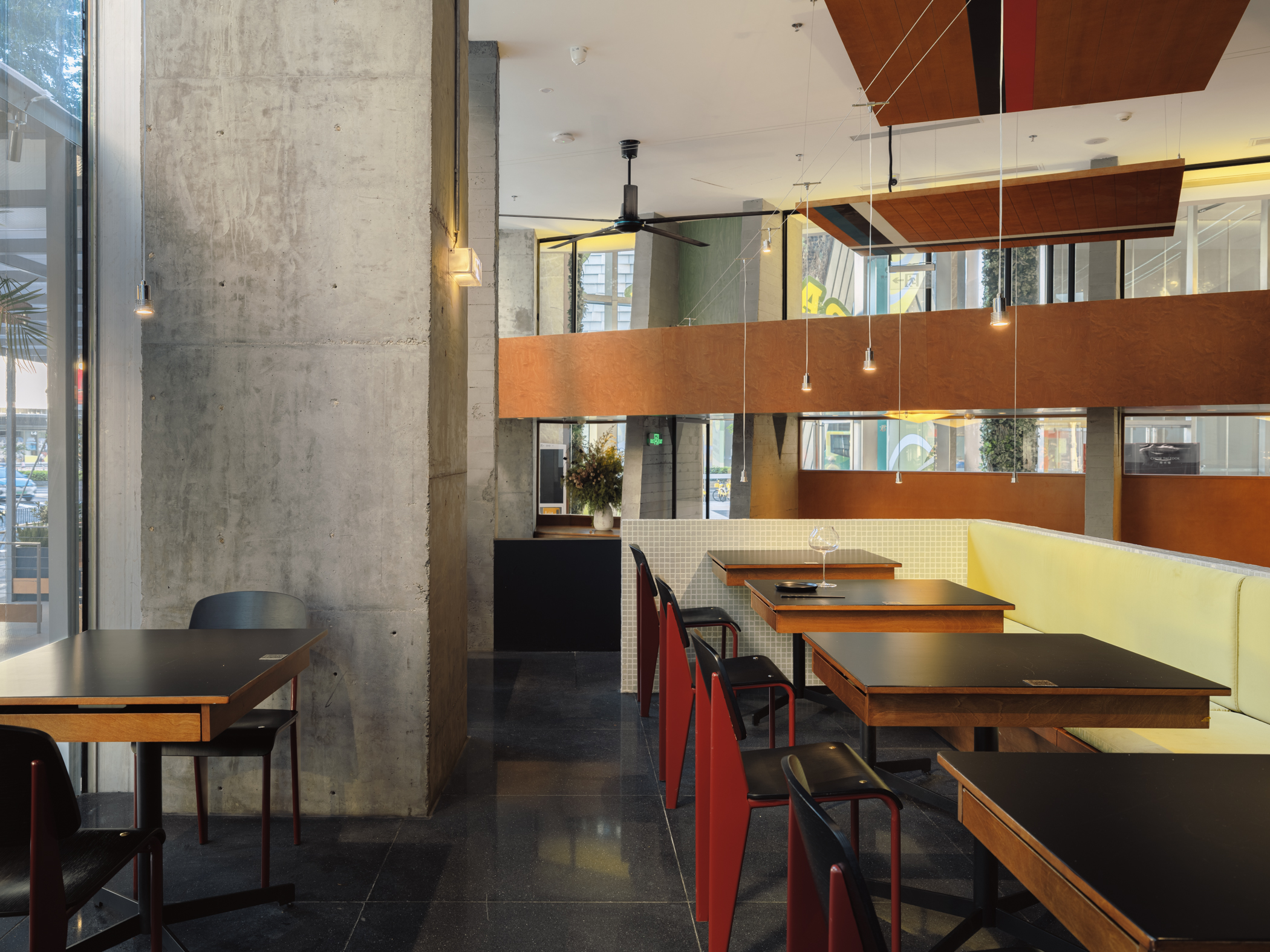
室内构成以水泥质感的柱体与实墙为基础,强调一种雕塑的体块感。水泥的空间基底之上,色彩块面共同构成一种厚重而富有张力的空间表情。马赛克作为本案的重要细节处理元素,被广泛应用于墙面和细节点缀。
马赛克是一种高度工业化的材料,在街头也常以碎片、边角的形式被重新拼贴,但它也许能被释放出更多的可能性。在本案中,我们采用高品质马赛克材料,不是为了追求图案化的表皮,而是借助它的小尺度与自由拼贴的特性,在空间表面展开更多可能性的材料语言——它更接近一种街头式的手工拼贴,这样的拼贴方式探索着“材料的精致”和“用法的野生”之间的关系。
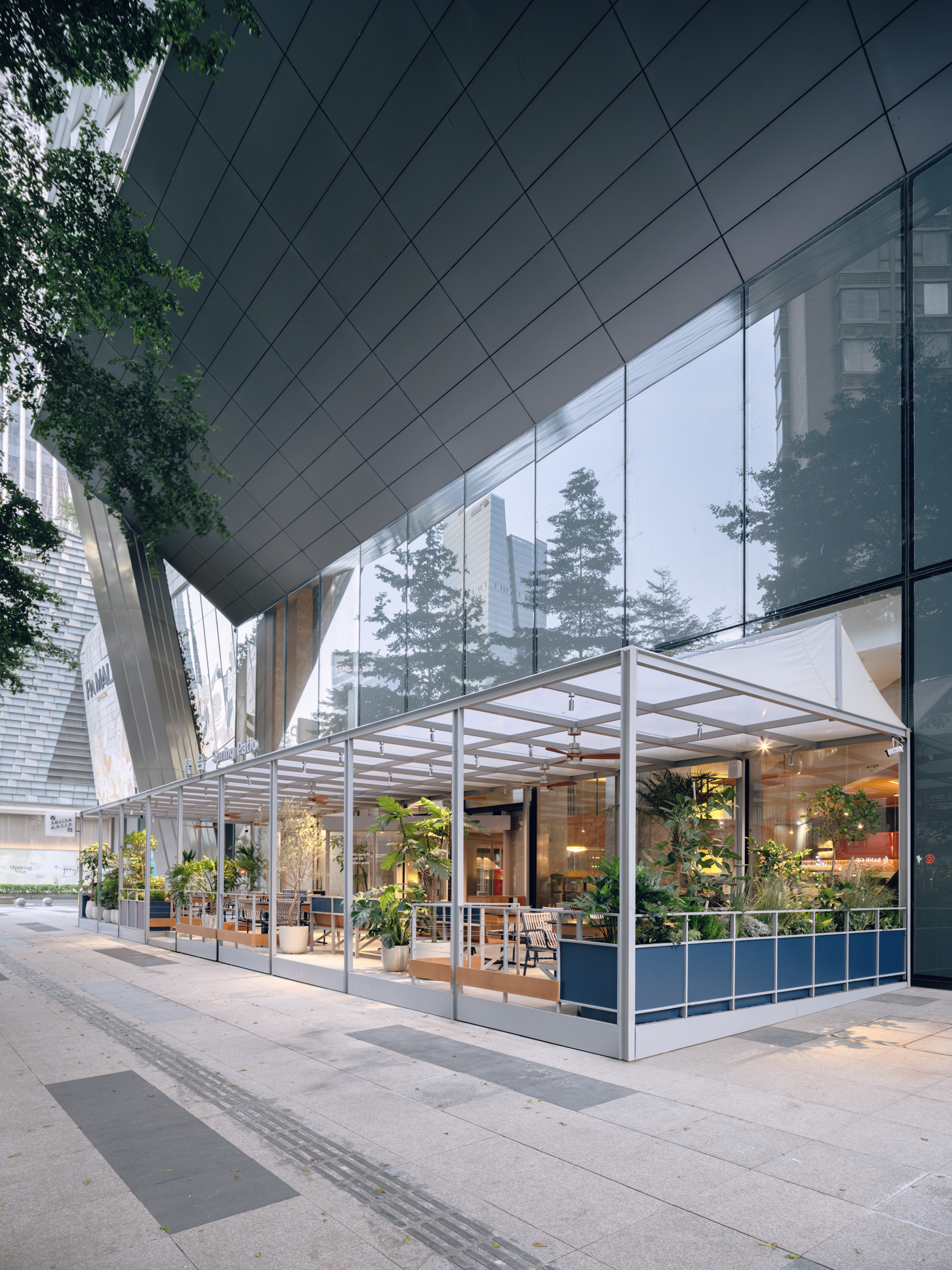
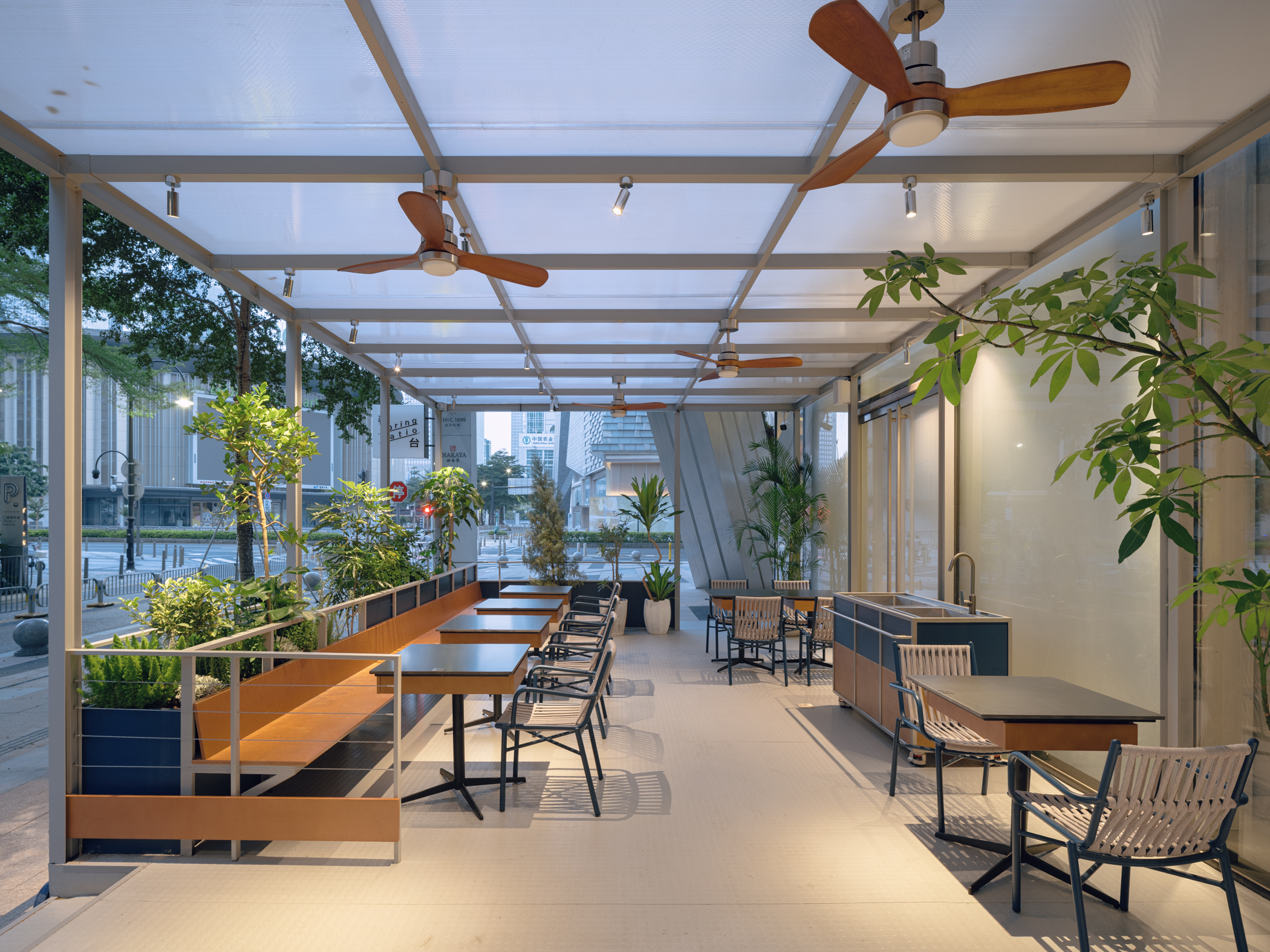
作为“Patio House”的重要组成部分,外摆区域面积充裕,结构采用钢结构框架,裸露的梁柱体系强化其构筑感,回应建筑性主题。我们将外摆理解为“house 的前院”,既是城市与室内的过渡,也是轻松、自由、可变化的空间平台。配合景观种植与户外家具,营造轻盈、开放、富有社交氛围的城市 patio。
我们在有限的平面条件下,构造出一个具有高低变化与动线层次的空间系统。靠窗一侧的客座区整体抬升,形成与外部街道的视觉错位与对望;这一抬升空间之下,是一个下沉的“酒窖”空间,入口低调隐蔽,强调仪式感。酒窖内部可穿行至包间,再从包间回到主厅,形成一个顺畅的环形流线,增强整体的游走感与空间体验。
入口立面以明确的框架和厚重体块构成,弱化传统商业立面的符号感,强调建筑性。结构成为视觉主角,使空间在城市中获得某种“独栋”的存在感,也呼应 house 的独立特质。
室内构成以水泥质感的柱体与实墙为基础,强调一种雕塑的体块感。水泥的空间基底之上,色彩块面共同构成一种厚重而富有张力的空间表情。马赛克作为本案的重要细节处理元素,被广泛应用于墙面和细节点缀。
马赛克是一种高度工业化的材料,在街头也常以碎片、边角的形式被重新拼贴,但它也许能被释放出更多的可能性。在本案中,我们采用高品质马赛克材料,不是为了追求图案化的表皮,而是借助它的小尺度与自由拼贴的特性,在空间表面展开更多可能性的材料语言——它更接近一种街头式的手工拼贴,这样的拼贴方式探索着“材料的精致”和“用法的野生”之间的关系。
作为“Patio House”的重要组成部分,外摆区域面积充裕,结构采用钢结构框架,裸露的梁柱体系强化其构筑感,回应建筑性主题。我们将外摆理解为“house 的前院”,既是城市与室内的过渡,也是轻松、自由、可变化的空间平台。配合景观种植与户外家具,营造轻盈、开放、富有社交氛围的城市 patio。
Continuing the naming inspiration of the Spring Patio brand, this project introduces the concept of a “Patio House” as its central spatial idea. Rather than relying on the decorative logic typical of restaurant interiors, the design approaches the space more like the construction of a house—one that can be lived in. Within the glass envelope of the city, it creates a self-contained place for dining and gathering.
Within the limited floor plan, a spatial system with varying levels and layered circulation was constructed. The seating area along the façade is raised, creating a subtle visual shift in relation to the street outside. Beneath this elevated platform lies a sunken “wine cellar,” with a discreet entrance that introduces a sense of ritual. From the cellar, one can move through to a private dining room and return to the main hall, forming a smooth loop that enriches the spatial experience and encourages movement.
The entrance façade is composed of a clear frame and solid massing, reducing the typical commercial façade language and emphasizing an architectural presence. Structure becomes the visual protagonist, giving the space a certain “stand-alone house” quality within the city and reinforcing the independence suggested by the idea of the house.
Inside, the space is organized around concrete-textured columns and solid walls, emphasizing sculptural mass and volume. On this concrete base, blocks of color form a spatial expression that feels both grounded and tense. Mosaic becomes an important detailing element in the project, widely applied across walls and smaller surfaces.
Although mosaic is a highly industrialized material, it is often recomposed on the street from fragments and leftovers. In this project, we chose high-quality mosaic not to create decorative patterns, but to take advantage of its small scale and flexible assembly. This allows the surfaces of the space to explore a richer material language—closer to a street-like collage—investigating the relationship between refined material and raw, improvisational use.
As an essential part of the Patio House concept, the outdoor seating area occupies a generous portion of the project. A steel structural frame with exposed beams and columns reinforces its constructed character and echoes the architectural theme. We imagine this outdoor space as the “front yard” of the house—a transition between city and interior, and a relaxed platform for social life. Together with planting and outdoor furniture, it forms a light, open, and sociable urban patio.
Within the limited floor plan, a spatial system with varying levels and layered circulation was constructed. The seating area along the façade is raised, creating a subtle visual shift in relation to the street outside. Beneath this elevated platform lies a sunken “wine cellar,” with a discreet entrance that introduces a sense of ritual. From the cellar, one can move through to a private dining room and return to the main hall, forming a smooth loop that enriches the spatial experience and encourages movement.
The entrance façade is composed of a clear frame and solid massing, reducing the typical commercial façade language and emphasizing an architectural presence. Structure becomes the visual protagonist, giving the space a certain “stand-alone house” quality within the city and reinforcing the independence suggested by the idea of the house.
Inside, the space is organized around concrete-textured columns and solid walls, emphasizing sculptural mass and volume. On this concrete base, blocks of color form a spatial expression that feels both grounded and tense. Mosaic becomes an important detailing element in the project, widely applied across walls and smaller surfaces.
Although mosaic is a highly industrialized material, it is often recomposed on the street from fragments and leftovers. In this project, we chose high-quality mosaic not to create decorative patterns, but to take advantage of its small scale and flexible assembly. This allows the surfaces of the space to explore a richer material language—closer to a street-like collage—investigating the relationship between refined material and raw, improvisational use.
As an essential part of the Patio House concept, the outdoor seating area occupies a generous portion of the project. A steel structural frame with exposed beams and columns reinforces its constructed character and echoes the architectural theme. We imagine this outdoor space as the “front yard” of the house—a transition between city and interior, and a relaxed platform for social life. Together with planting and outdoor furniture, it forms a light, open, and sociable urban patio.