EN
Spring Patio
春台
2024
#101
项目:春台
地址:成都锦江区红石住横街10号院
类型:室内设计
面积:410㎡
状态:已完工
摄影:郭新新
Project: Spring Patio
Location: No. 10 Hongshizhu Heng Street, Jinjiang District, Chengdu
Type: Interior Design
Area: 410㎡
Status: Completed
Photography: Guo Xinxin
春台是一家位于成都 Temple Lane 商业园区内的云南餐酒馆。本次室内设计尝试探讨,在被保留的建筑结构框架之下,新的空间元素如何以一种轻盈的方式生长于既有建筑之中。
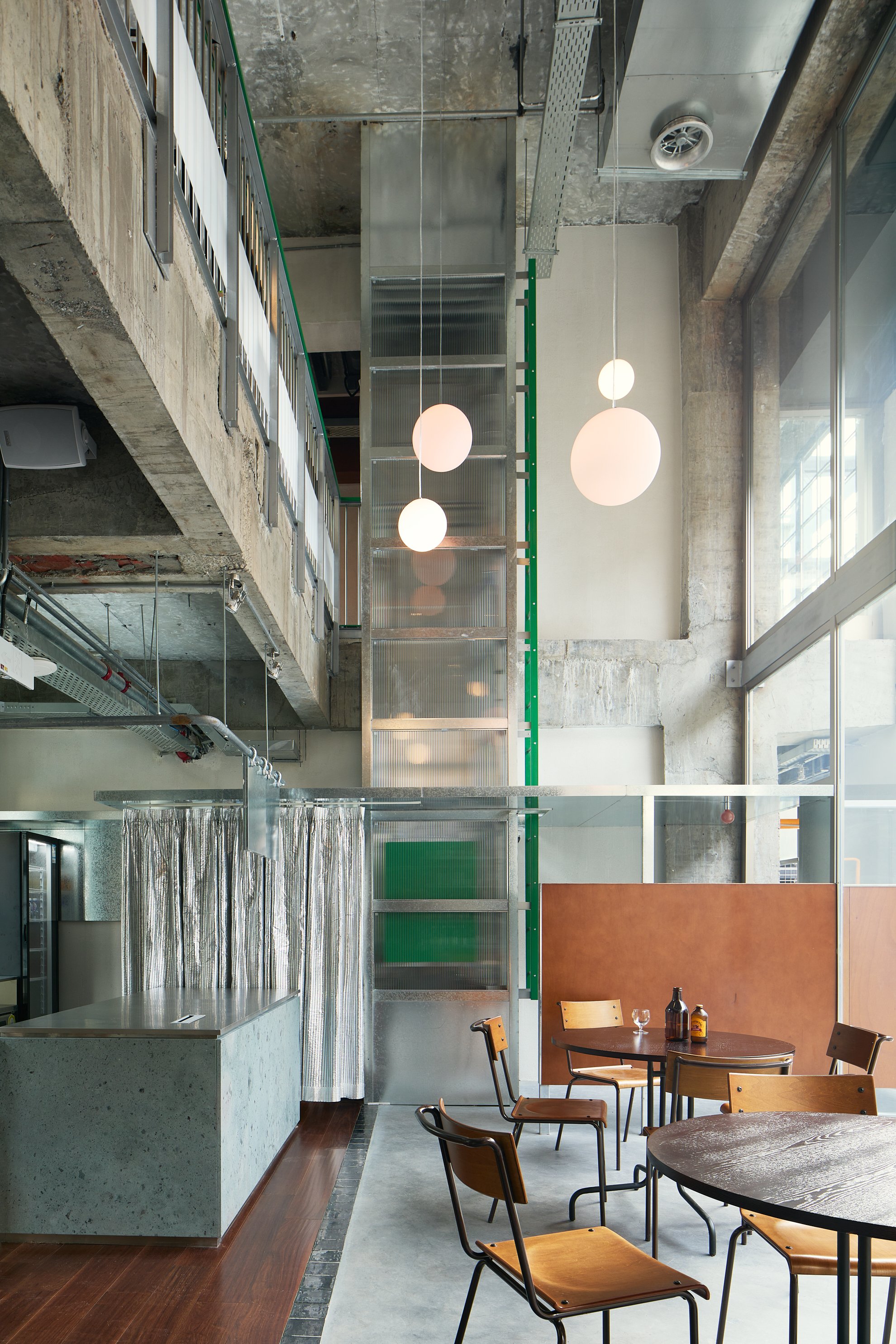
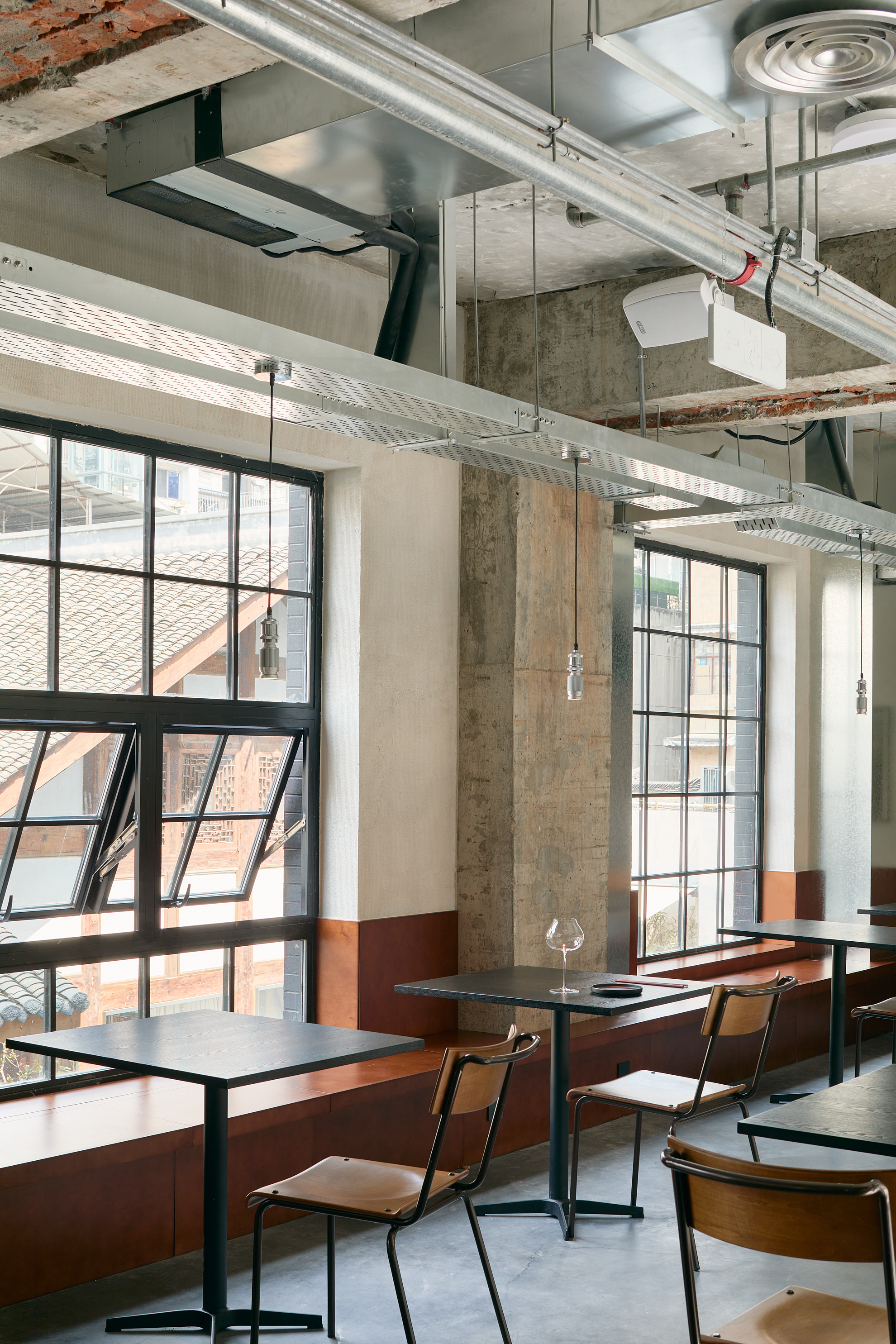
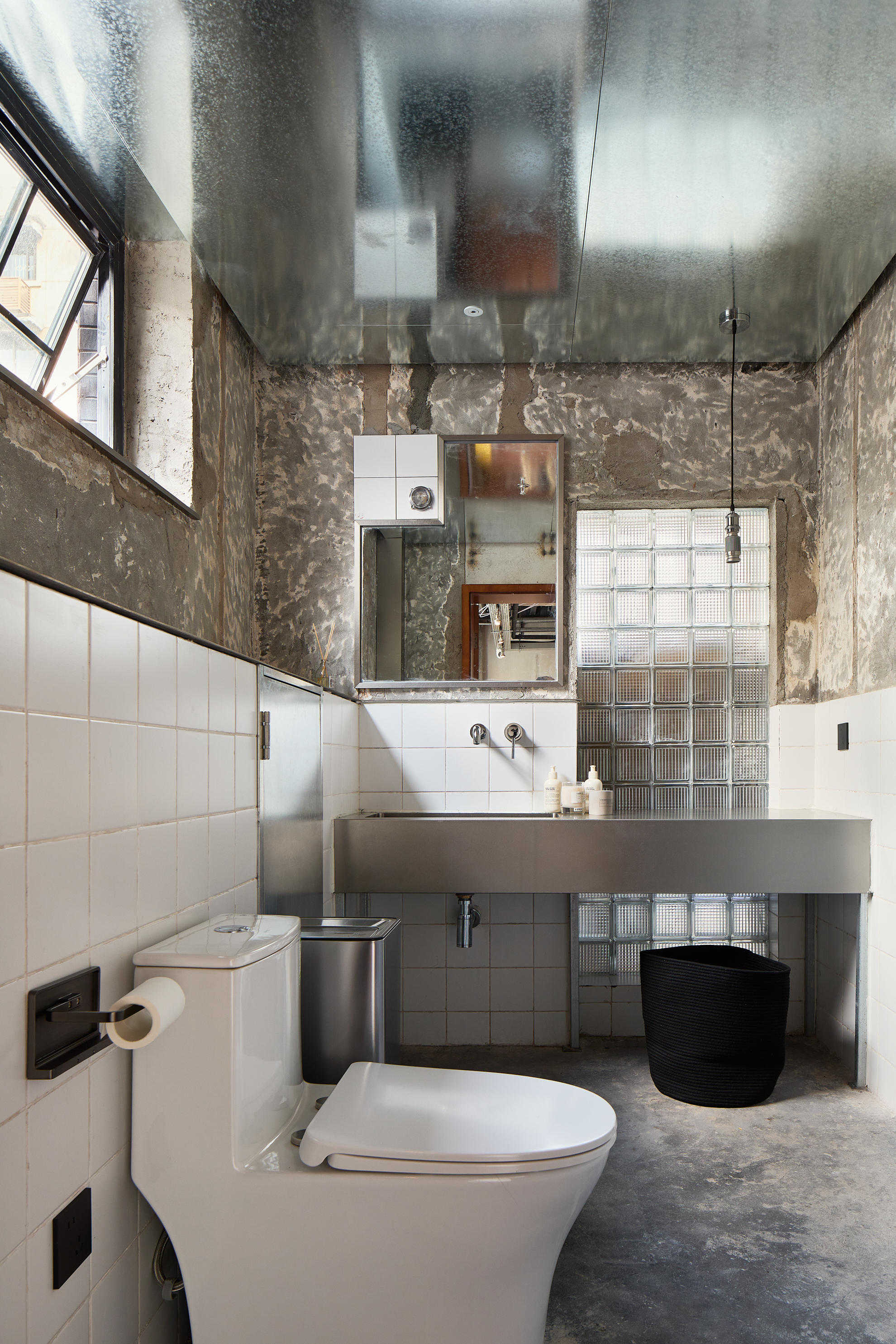
设计以保留并凸显原有建筑结构为基础,裸露红砖、混凝土及梁柱构件,尽量减少过度形式化的设计介入。整体空间的营造更像是在原有建筑草稿之上的一次“素描式”叠加,在保留原始空间气质的同时,嵌入新的功能与使用方式。大量普通工业成品材料以其直接、易得的特性,与既有建筑形成对话。
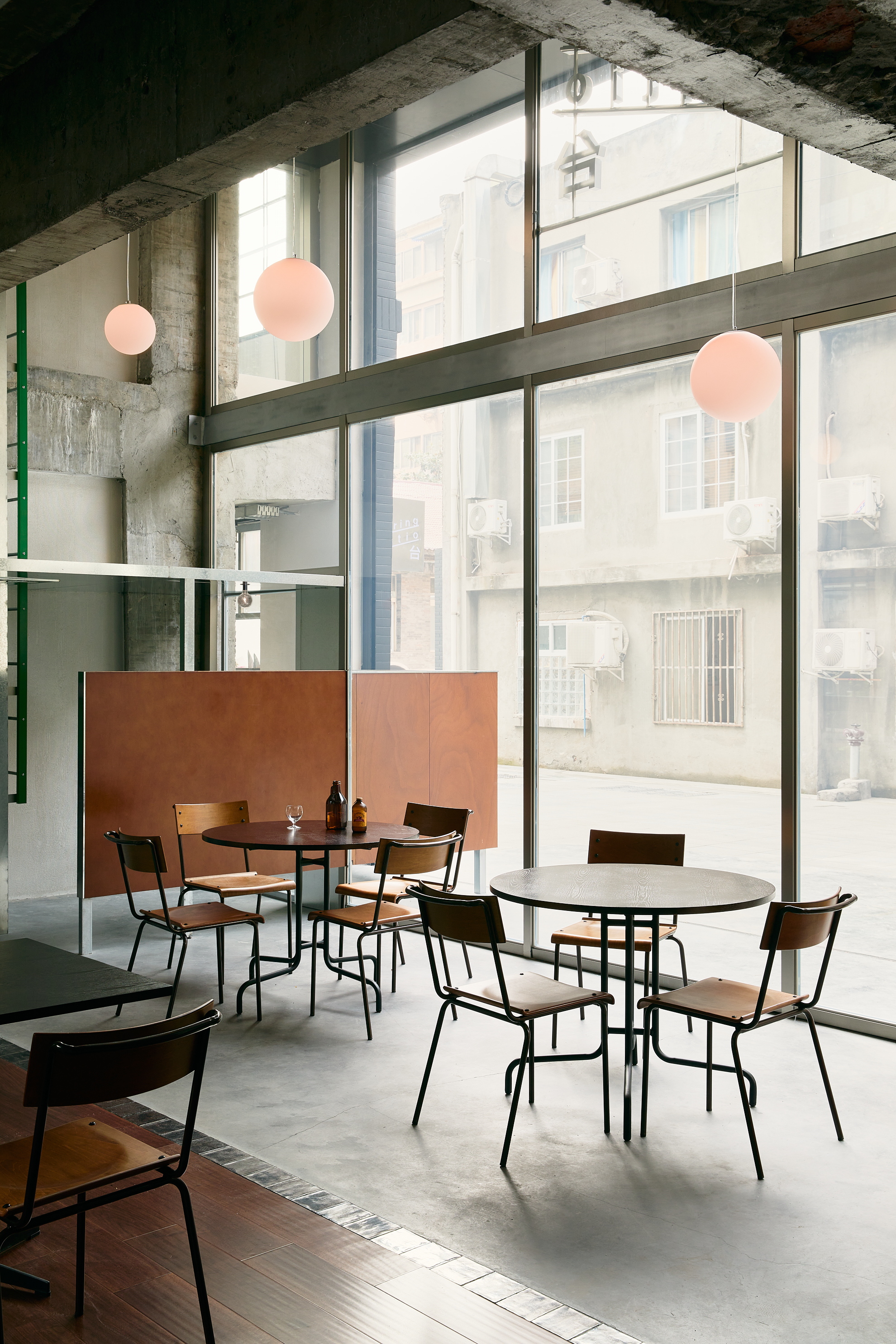
餐厅立面向内退让,形成双层立面结构:外层为自动卷帘门,内层为落地玻璃窗面,在最大程度引入自然光的同时,加强室内与街道之间的视觉联系。
由于平面限制,后勤通道突出于立面之外。设计并未刻意隐藏这一部分,而是将其纳入立面系统,使其兼具双重功能:一侧面向街道,为行人提供短暂停留与等待的空间;另一侧则保持后勤通道的原有使用逻辑。
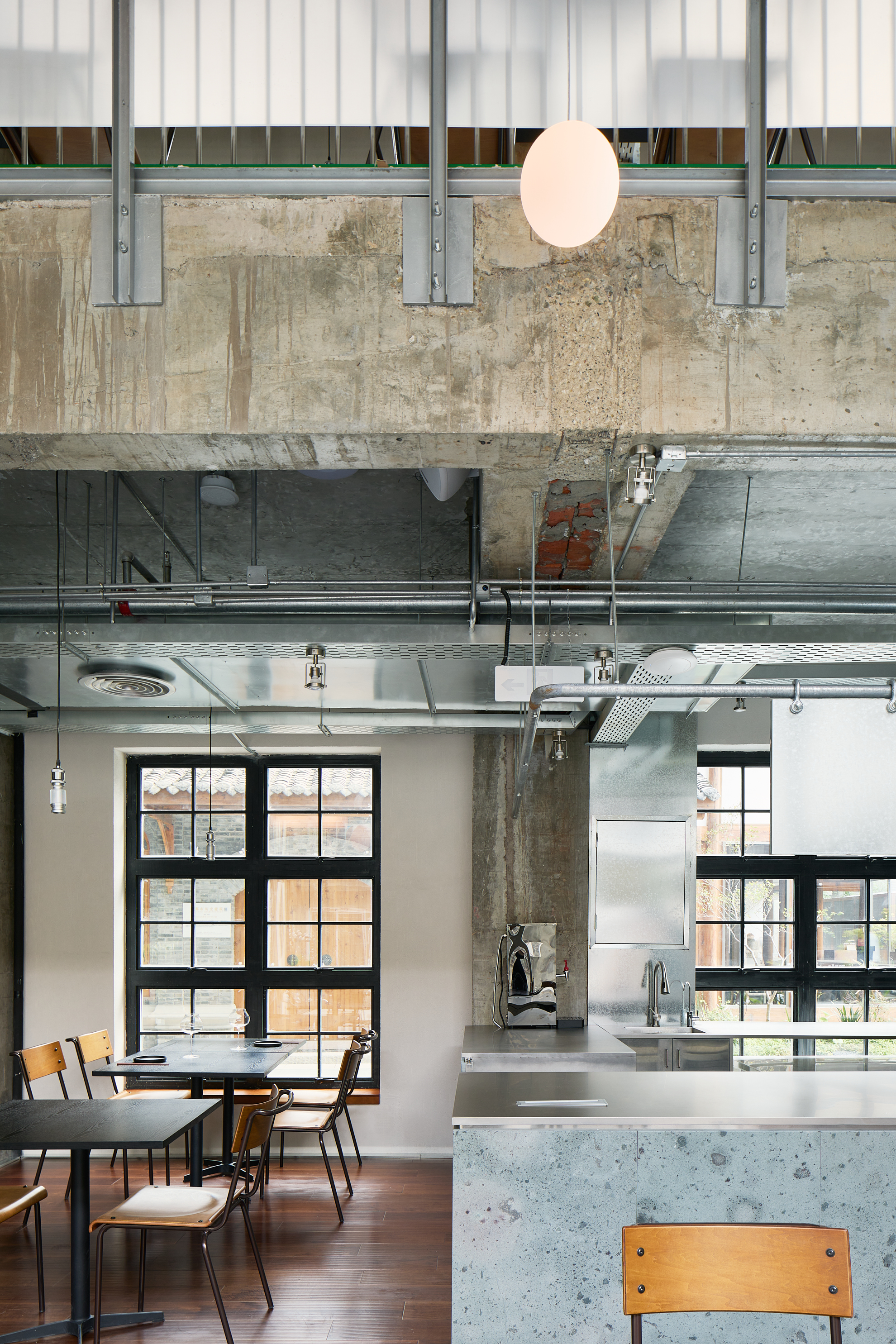
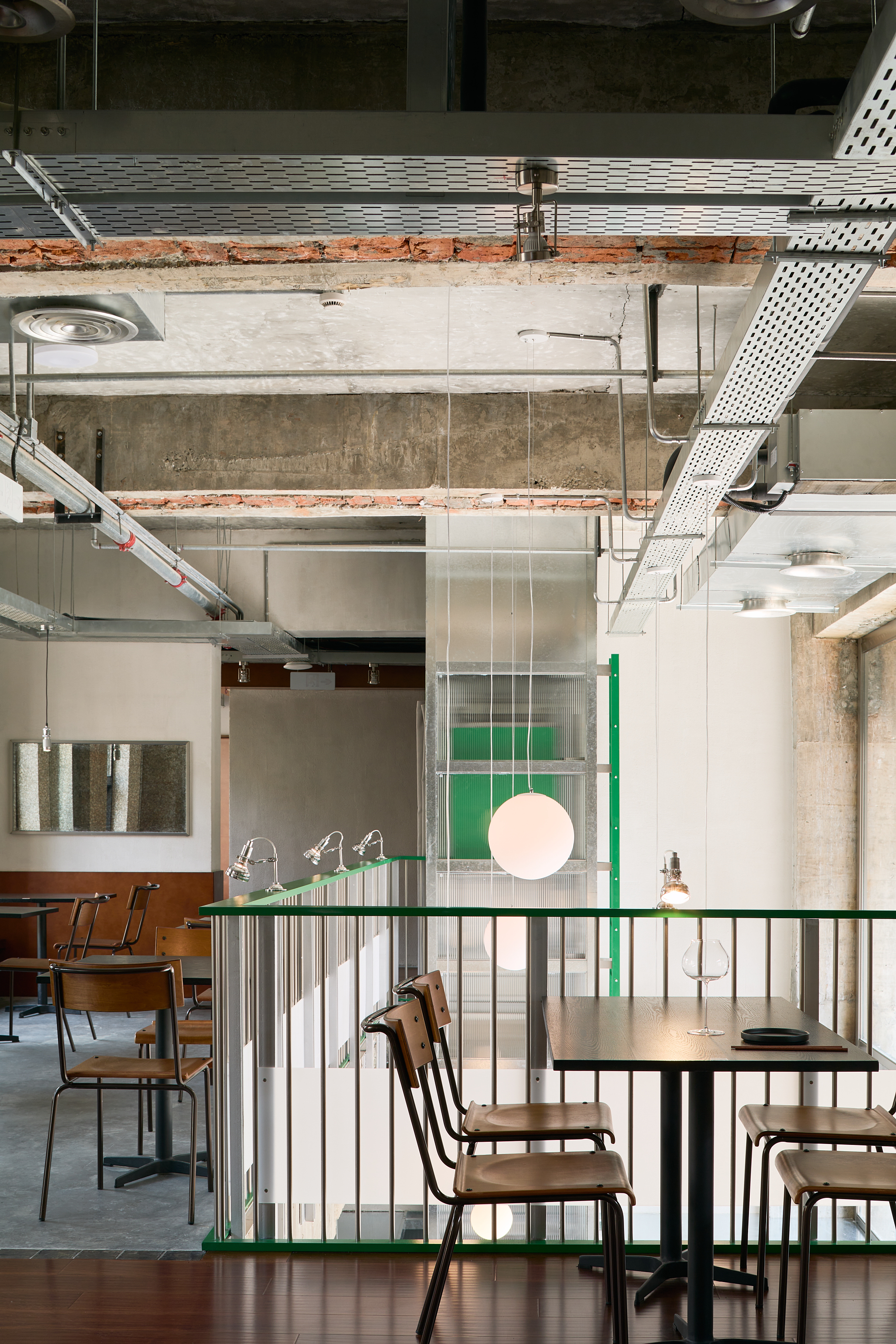
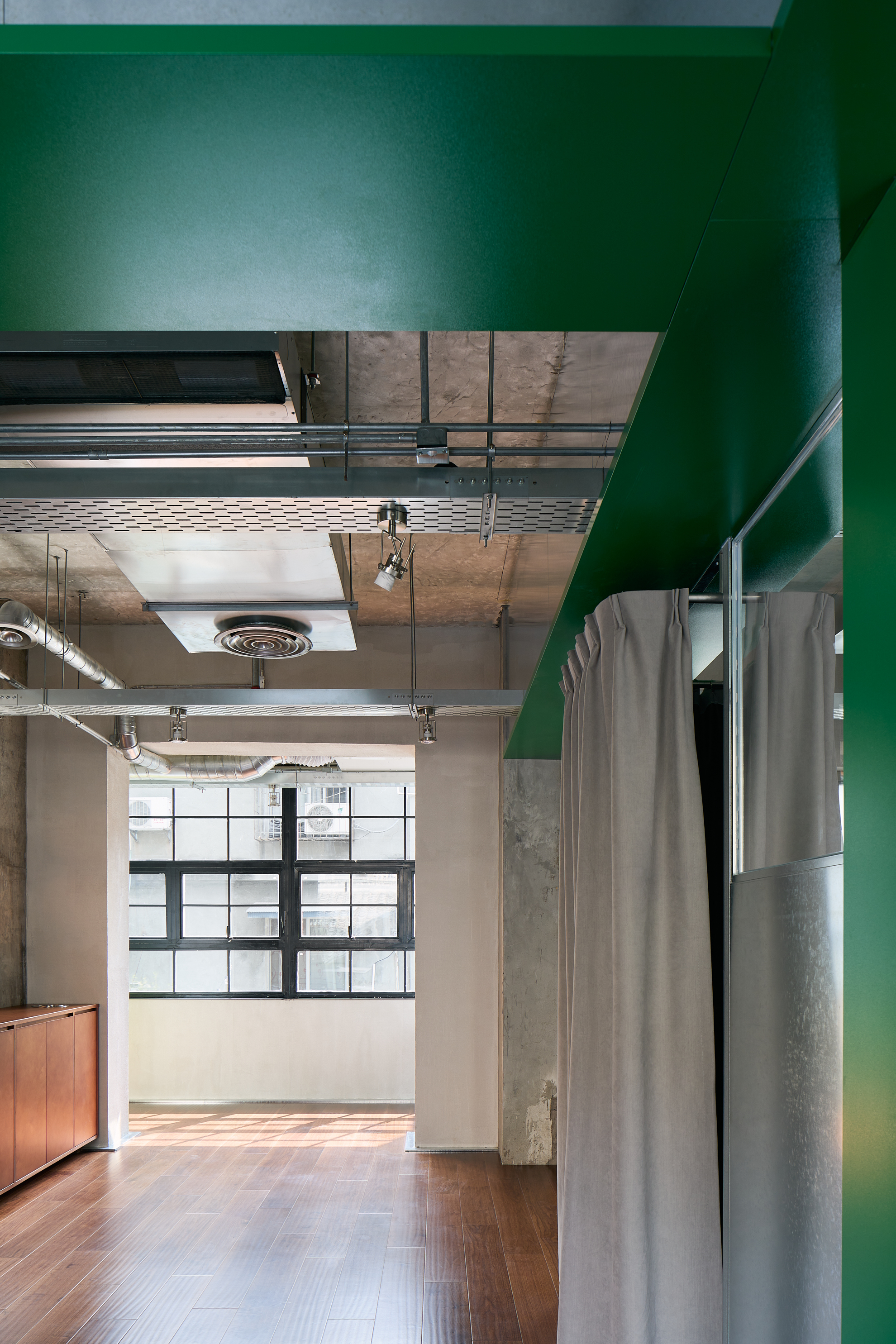
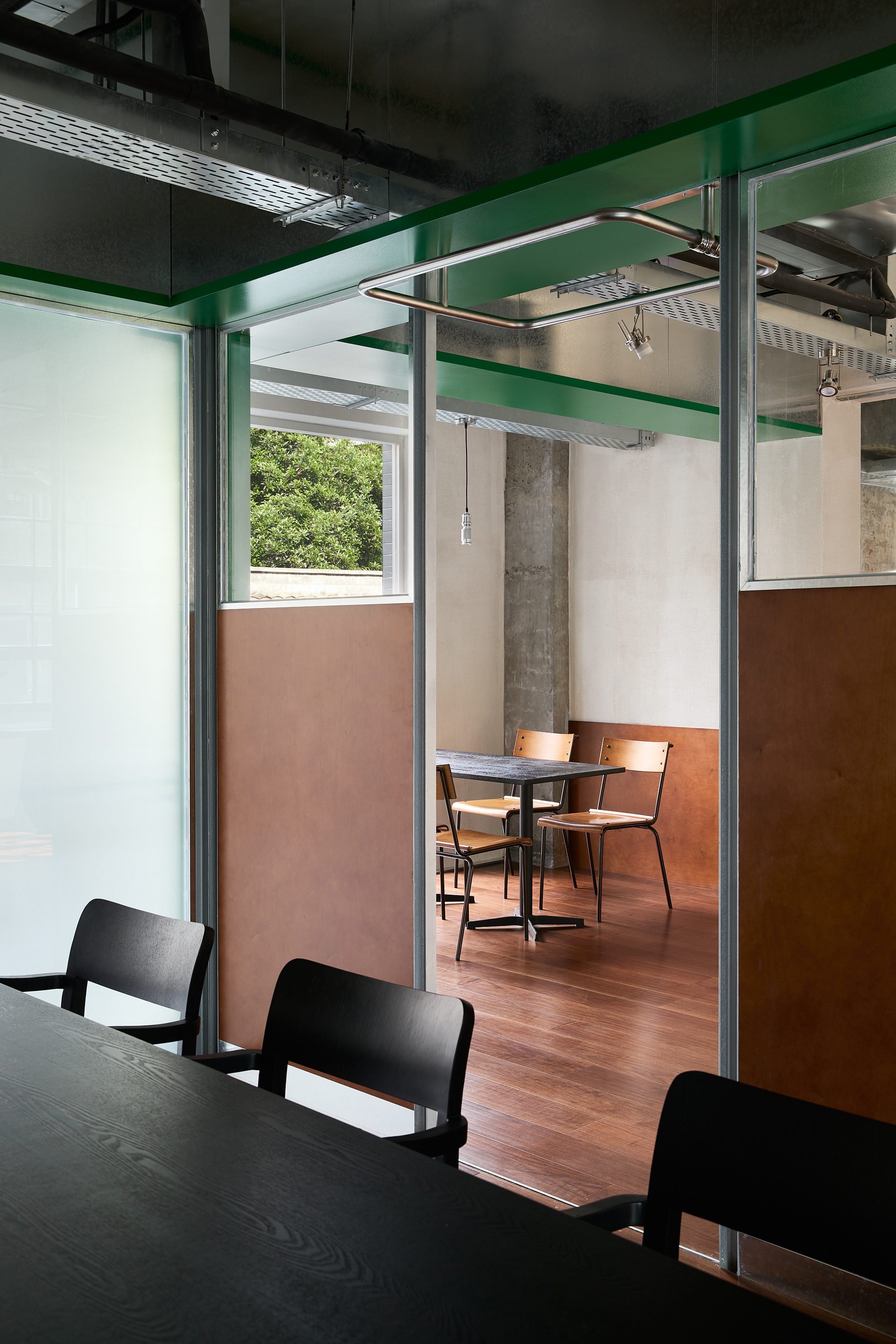
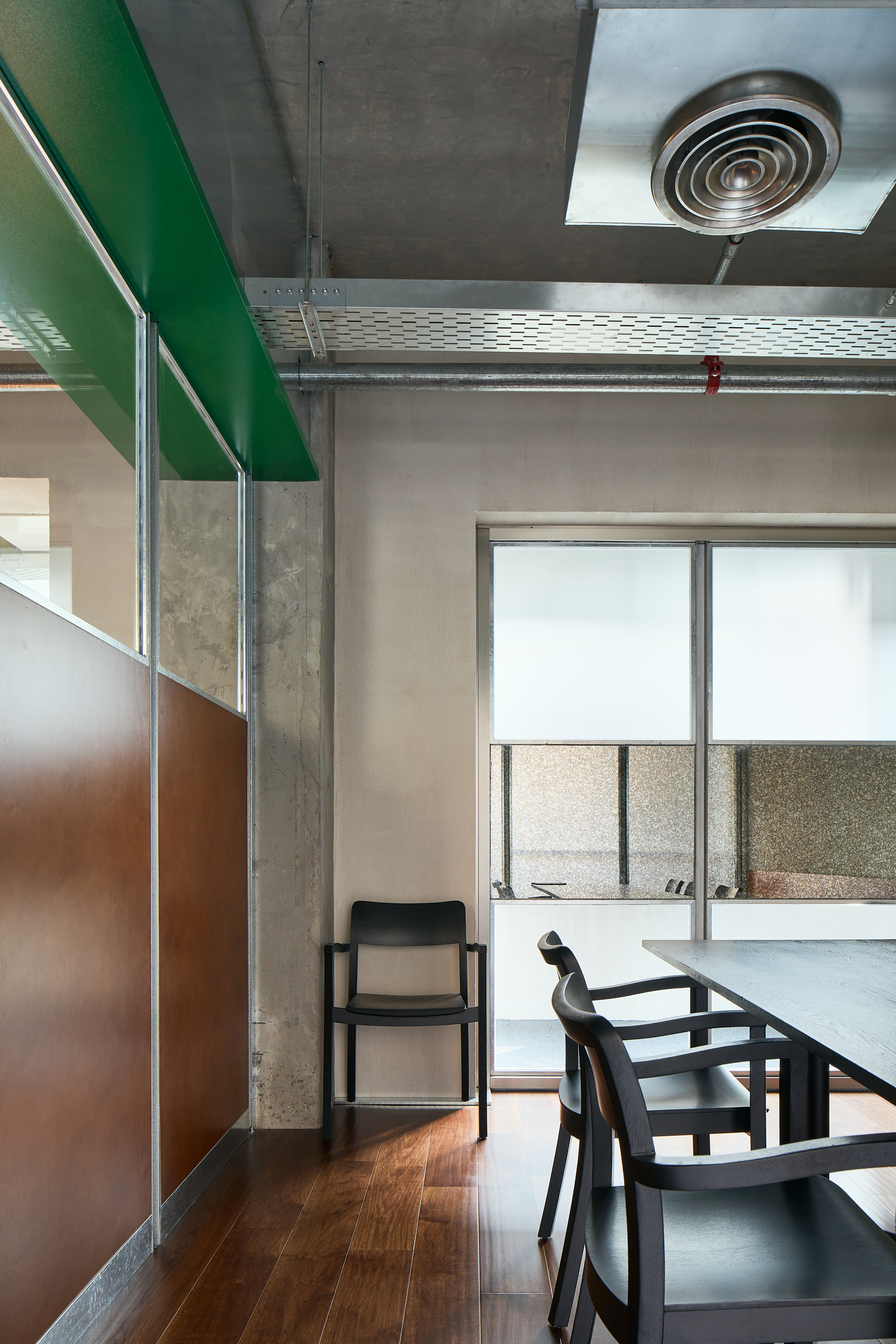
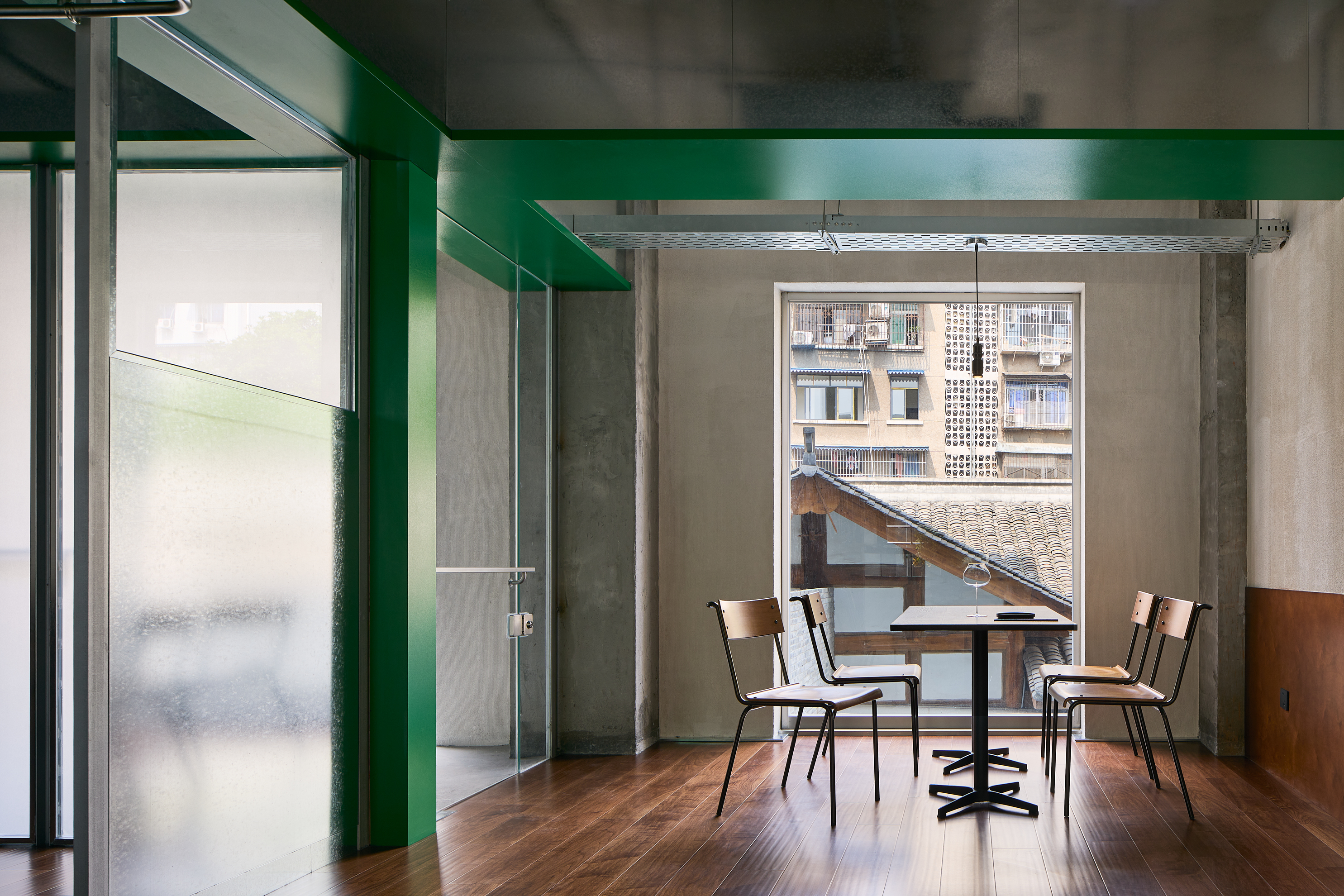
拆除原有隔墙后,室内裸露出建筑结构骨架。机电管线通过桥架统一整理并保持外露,使电线、水管及暖通系统清晰可见,形成一种粗粝而有秩序的空间表达。
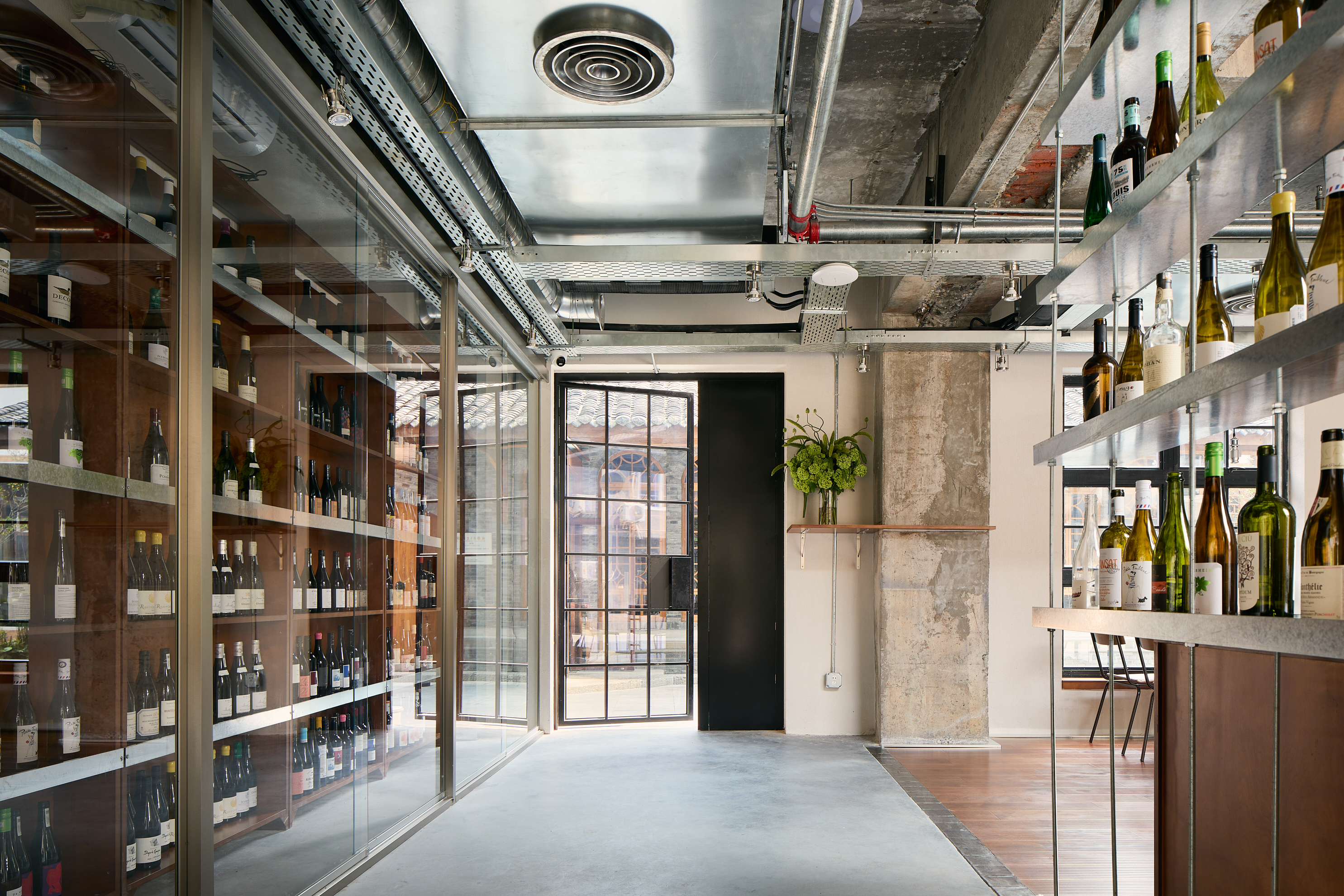
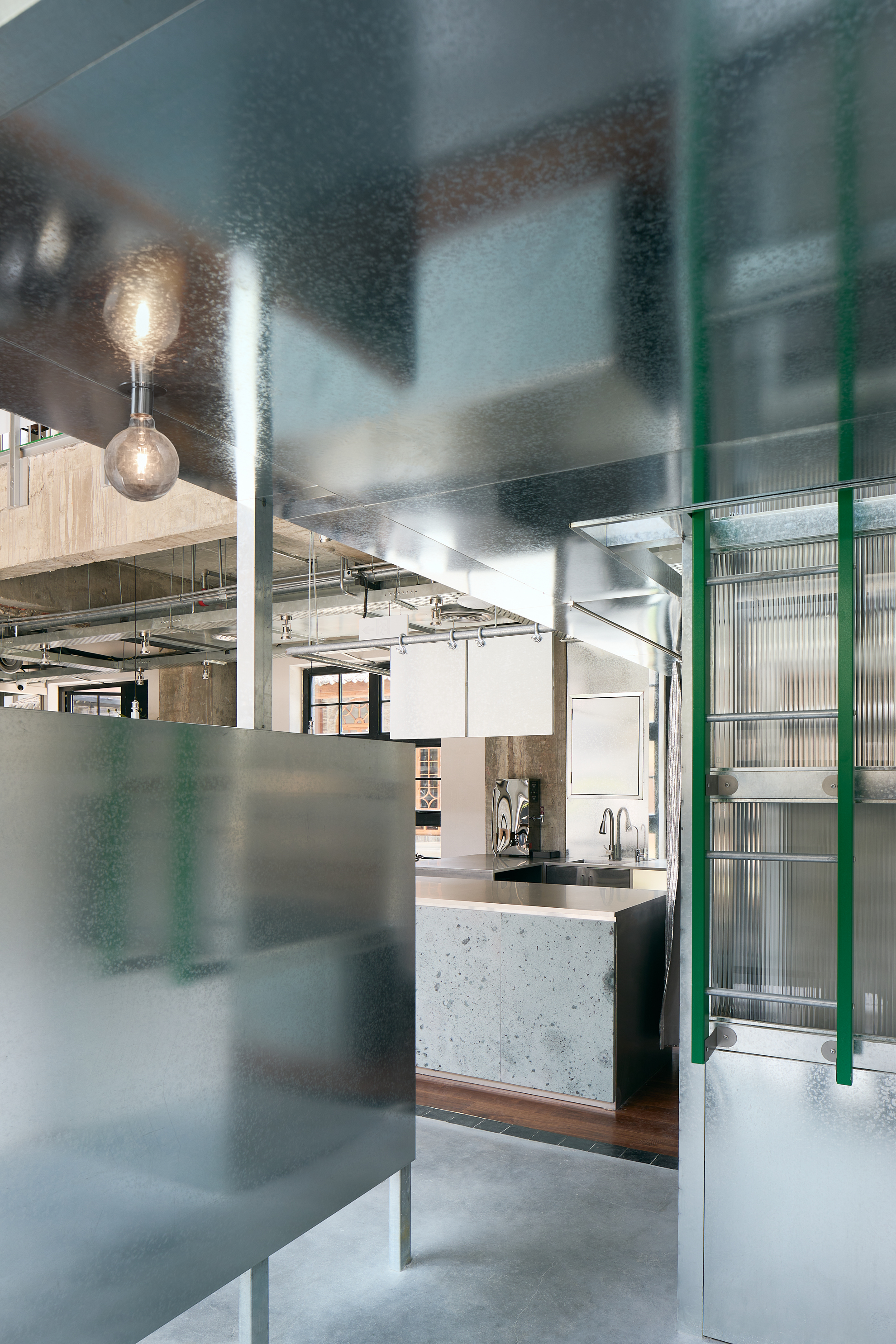
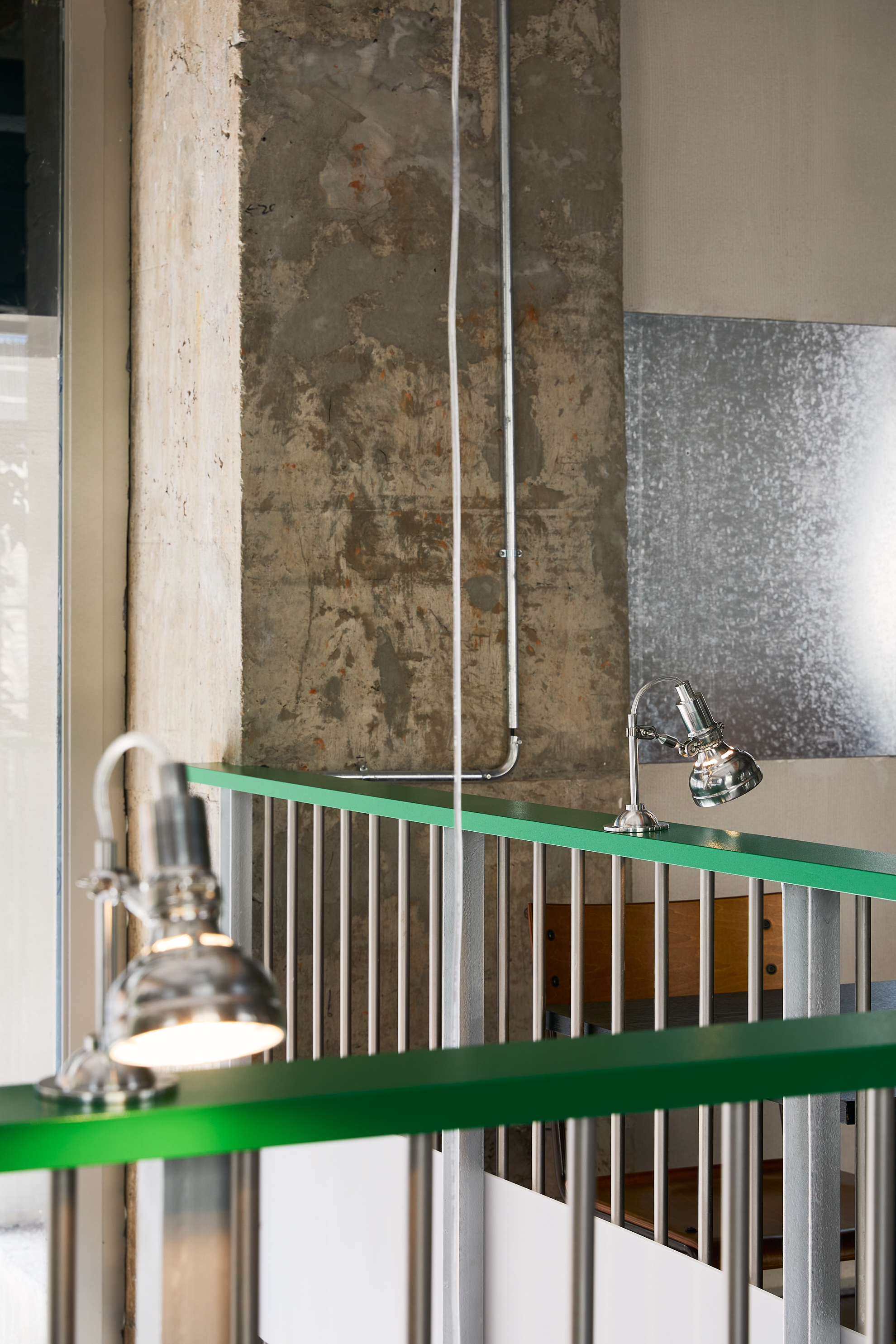
地面以木地板与金刚砂自流平交替铺设划分空间区域,金属釉面手工砖作为两种材料之间的过渡。酒柜设计则借鉴日常储物柜的简单形式,并结合桥架结构形成悬吊式展示系统。
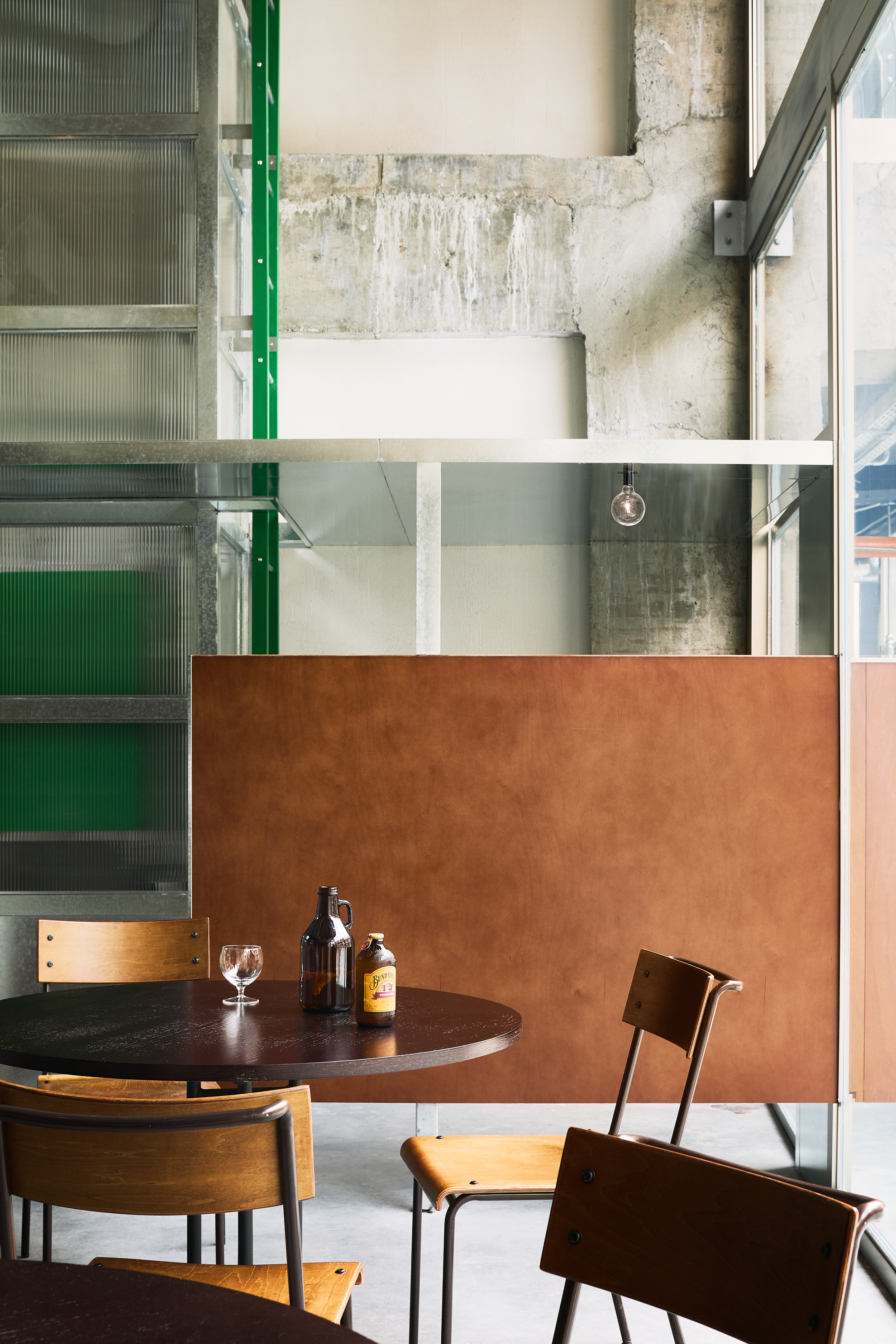
贯穿两层空间的餐梯被保留下来,其轿厢成为空间中唯一的跳色元素。夜晚时分,中庭悬挂的球形灯与酒窖柔和的泛光共同营造出温暖的就餐氛围,呈现出春台作为云南餐酒馆轻松而开放的空间气质。
设计以保留并凸显原有建筑结构为基础,裸露红砖、混凝土及梁柱构件,尽量减少过度形式化的设计介入。整体空间的营造更像是在原有建筑草稿之上的一次“素描式”叠加,在保留原始空间气质的同时,嵌入新的功能与使用方式。大量普通工业成品材料以其直接、易得的特性,与既有建筑形成对话。
餐厅立面向内退让,形成双层立面结构:外层为自动卷帘门,内层为落地玻璃窗面,在最大程度引入自然光的同时,加强室内与街道之间的视觉联系。
由于平面限制,后勤通道突出于立面之外。设计并未刻意隐藏这一部分,而是将其纳入立面系统,使其兼具双重功能:一侧面向街道,为行人提供短暂停留与等待的空间;另一侧则保持后勤通道的原有使用逻辑。
拆除原有隔墙后,室内裸露出建筑结构骨架。机电管线通过桥架统一整理并保持外露,使电线、水管及暖通系统清晰可见,形成一种粗粝而有秩序的空间表达。
地面以木地板与金刚砂自流平交替铺设划分空间区域,金属釉面手工砖作为两种材料之间的过渡。酒柜设计则借鉴日常储物柜的简单形式,并结合桥架结构形成悬吊式展示系统。
贯穿两层空间的餐梯被保留下来,其轿厢成为空间中唯一的跳色元素。夜晚时分,中庭悬挂的球形灯与酒窖柔和的泛光共同营造出温暖的就餐氛围,呈现出春台作为云南餐酒馆轻松而开放的空间气质。
Spring Patio is a Yunnan bistro located in the Temple Lane commercial complex in Chengdu. This interior project explores how new spatial elements can grow lightly within an existing building while retaining its original structural framework.
The design is based on preserving and emphasizing the original building structure, exposing red brick, concrete, beams, and columns while minimizing overly formalized design intervention. The overall space is conceived more like a sketch layered onto the building’s original draft—embedding new functions and ways of use while retaining the raw character of the existing architecture. A large number of ordinary industrial ready-made materials are introduced for their directness and accessibility, forming a dialogue with the original building.
The restaurant façade is set back inward to create a double-layered frontage: an outer automatic roller shutter and an inner full-height glass façade. This arrangement maximizes natural light while strengthening the visual relationship between the interior and the street.
Due to the constraints of the floor plan, the service corridor projects beyond the façade line. Rather than concealing this condition, the design incorporates it into the façade system, giving it a dual function: one side faces the street and provides a place for passersby to pause and wait, while the other maintains the original logic of the back-of-house circulation.
After the removal of the original partition walls, the structural skeleton of the building was fully revealed. Mechanical and electrical services are organized through exposed cable trays, allowing wiring, plumbing, and HVAC systems to remain visible and contributing to a spatial expression that is both rough and ordered.
The floor is zoned through alternating areas of timber flooring and self-leveling emery finish, with metallic glazed handmade tiles used as transitions between the two. The wine cabinet draws from the simple form of everyday storage lockers and, together with the cable tray structure, forms a suspended display system.
The dumbwaiter running through the two levels was retained, with its cabin becoming the only brightly colored accent in the space. At night, spherical pendant lights in the atrium and the soft glow of the wine cellar together create a warm dining atmosphere, expressing the relaxed and open character of Spring Patio as a Yunnan bistro.
The design is based on preserving and emphasizing the original building structure, exposing red brick, concrete, beams, and columns while minimizing overly formalized design intervention. The overall space is conceived more like a sketch layered onto the building’s original draft—embedding new functions and ways of use while retaining the raw character of the existing architecture. A large number of ordinary industrial ready-made materials are introduced for their directness and accessibility, forming a dialogue with the original building.
The restaurant façade is set back inward to create a double-layered frontage: an outer automatic roller shutter and an inner full-height glass façade. This arrangement maximizes natural light while strengthening the visual relationship between the interior and the street.
Due to the constraints of the floor plan, the service corridor projects beyond the façade line. Rather than concealing this condition, the design incorporates it into the façade system, giving it a dual function: one side faces the street and provides a place for passersby to pause and wait, while the other maintains the original logic of the back-of-house circulation.
After the removal of the original partition walls, the structural skeleton of the building was fully revealed. Mechanical and electrical services are organized through exposed cable trays, allowing wiring, plumbing, and HVAC systems to remain visible and contributing to a spatial expression that is both rough and ordered.
The floor is zoned through alternating areas of timber flooring and self-leveling emery finish, with metallic glazed handmade tiles used as transitions between the two. The wine cabinet draws from the simple form of everyday storage lockers and, together with the cable tray structure, forms a suspended display system.
The dumbwaiter running through the two levels was retained, with its cabin becoming the only brightly colored accent in the space. At night, spherical pendant lights in the atrium and the soft glow of the wine cellar together create a warm dining atmosphere, expressing the relaxed and open character of Spring Patio as a Yunnan bistro.