EN
Baekjeong KBBQ · Baoan
姜虎东白丁 宝安
2025
#125

项目:姜虎东白丁 宝安
地址:深圳壹方城
类型:室内设计
面积:340㎡
年份:2025
摄影:Finn Chiu
Project: Baekjeong KBBQ · Baoan
Location: Shenzhen Uniwalk Qianhai, Baoan, Shenzhen
Type: Interior Design
Area: 340㎡
Year: 2025
Photography: Finn Chiu
一门社一直关心那些被日常反复使用、慢慢磨出来的空间经验。比起“做新”,我们更在意一个地方是不是经得起用,是不是让人待得住。
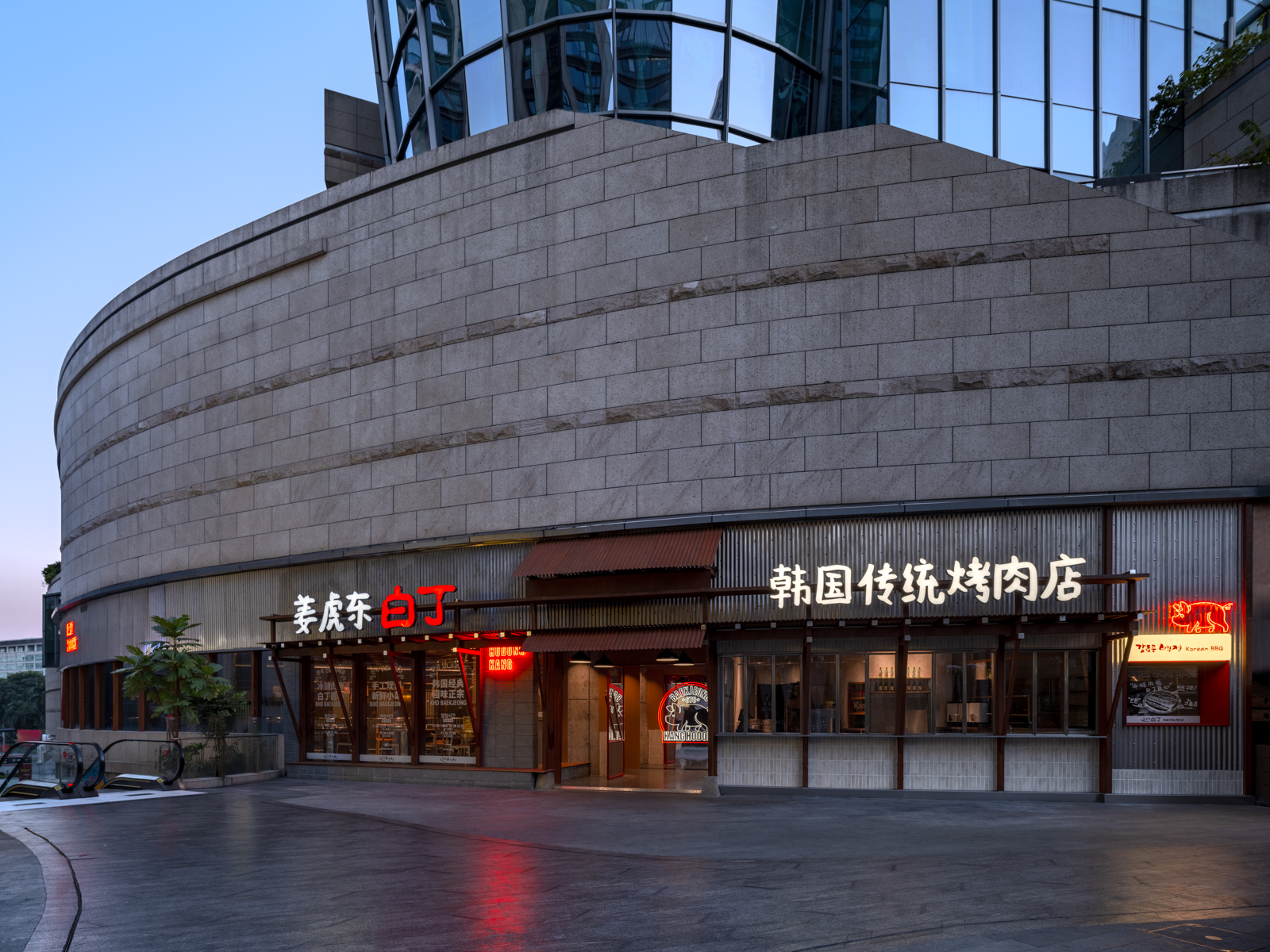
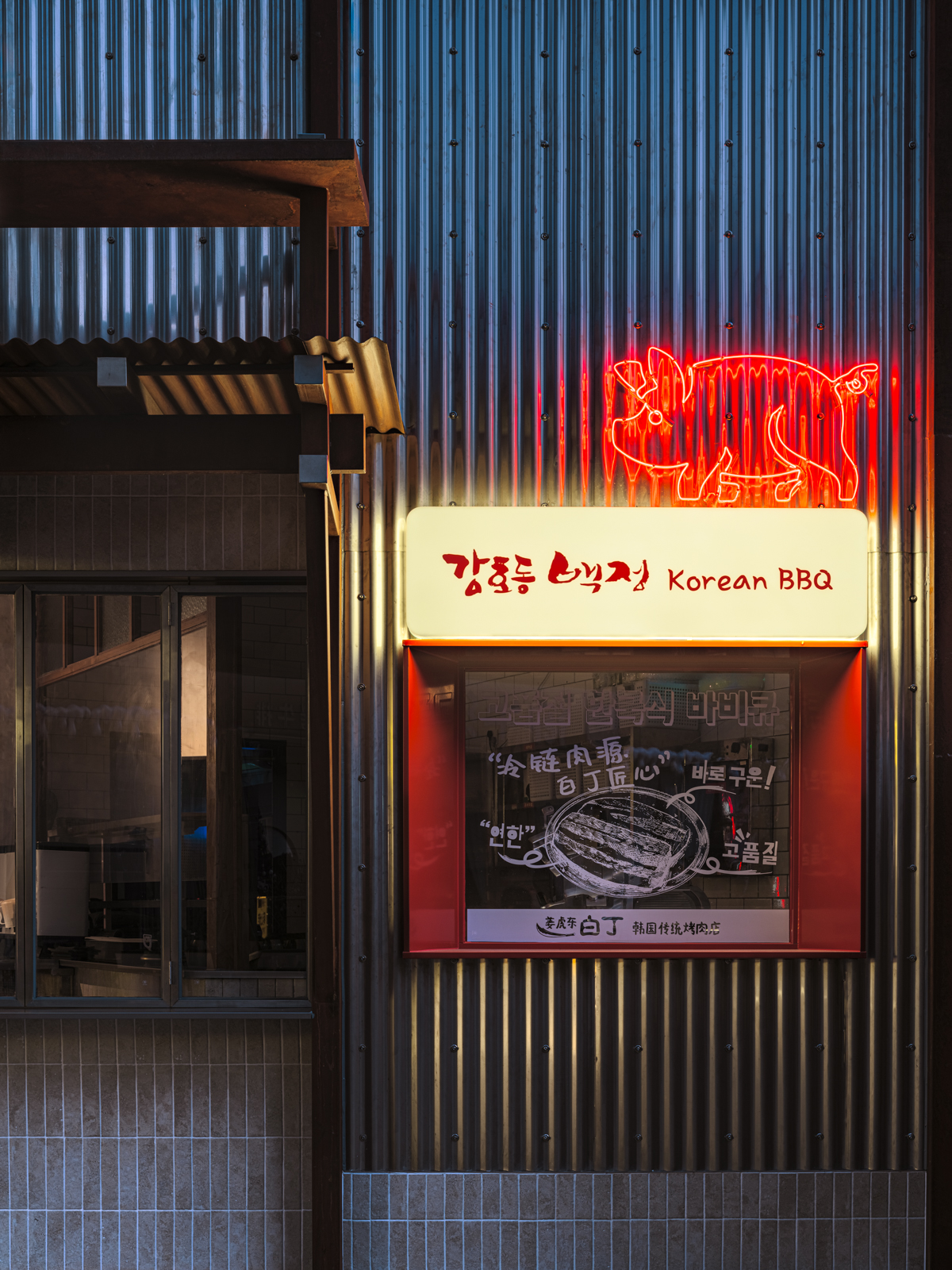
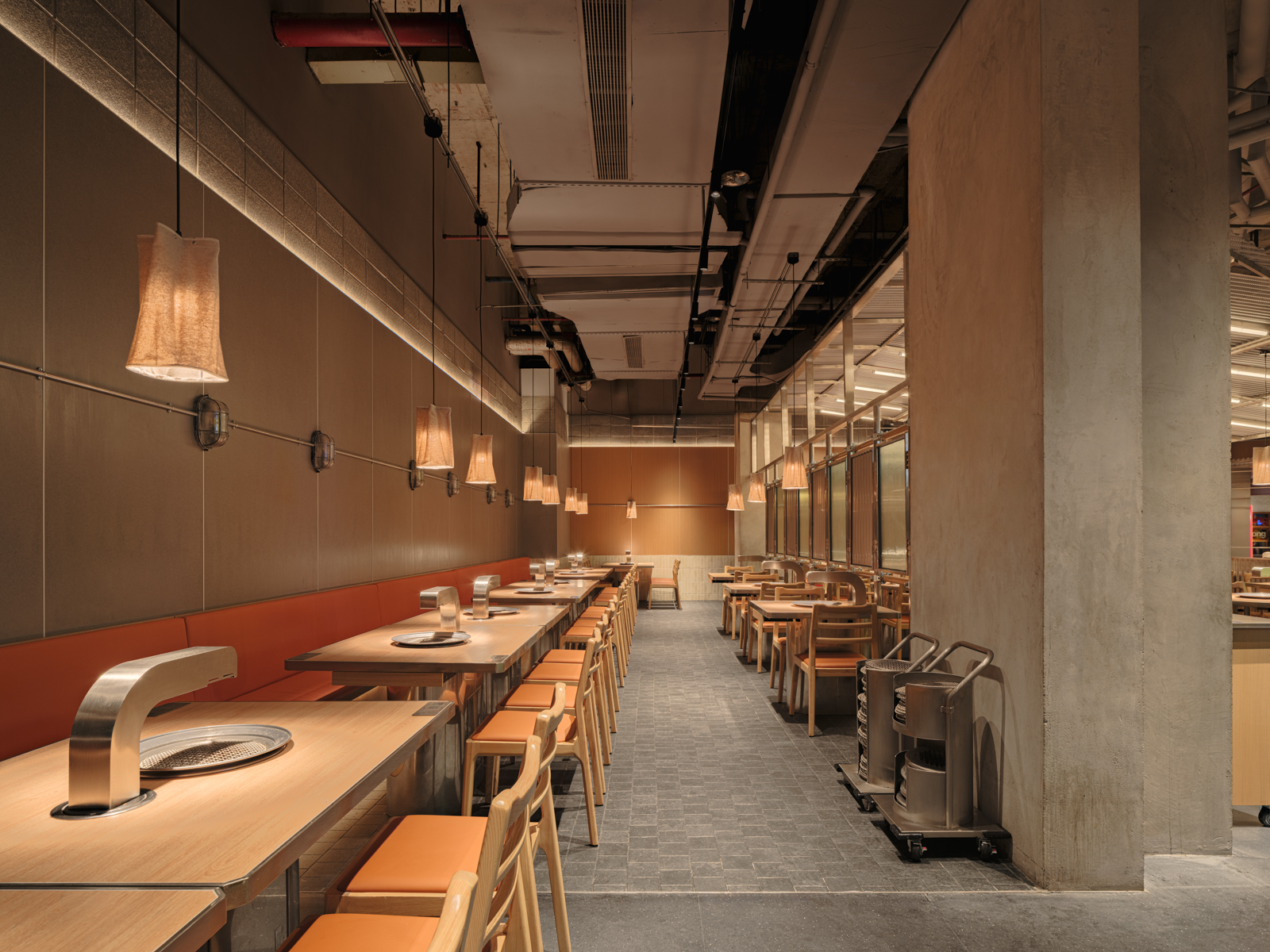
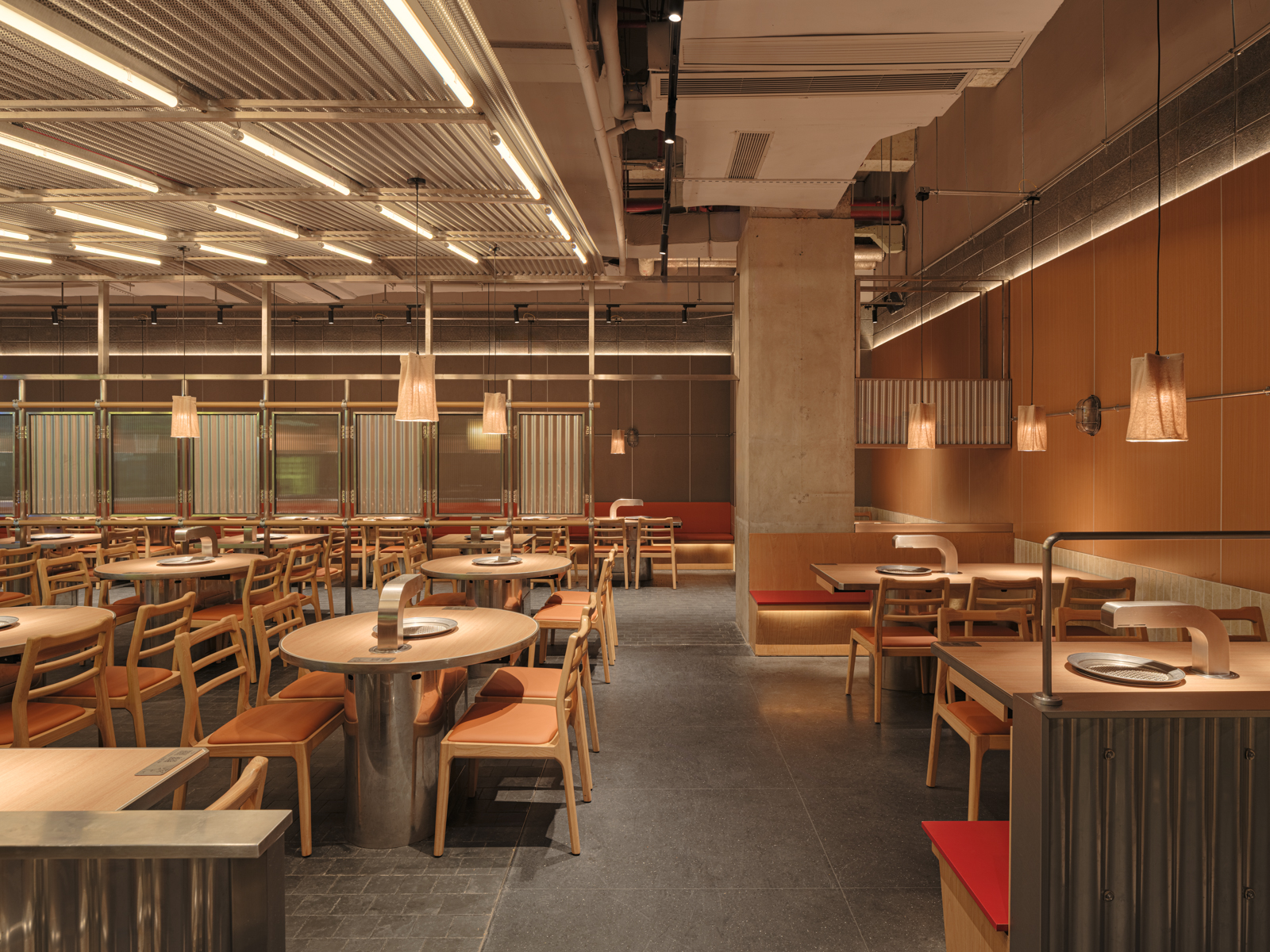
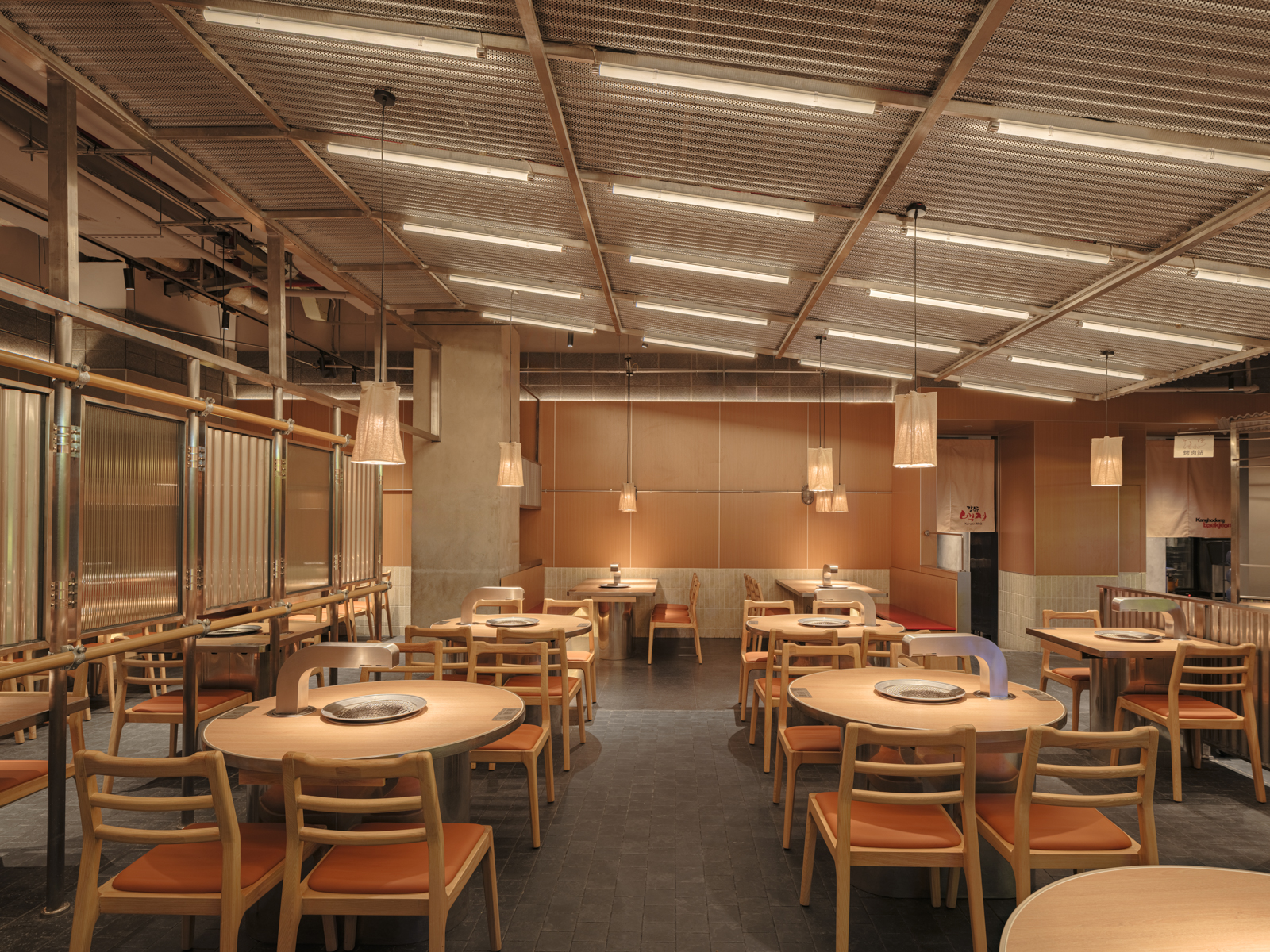
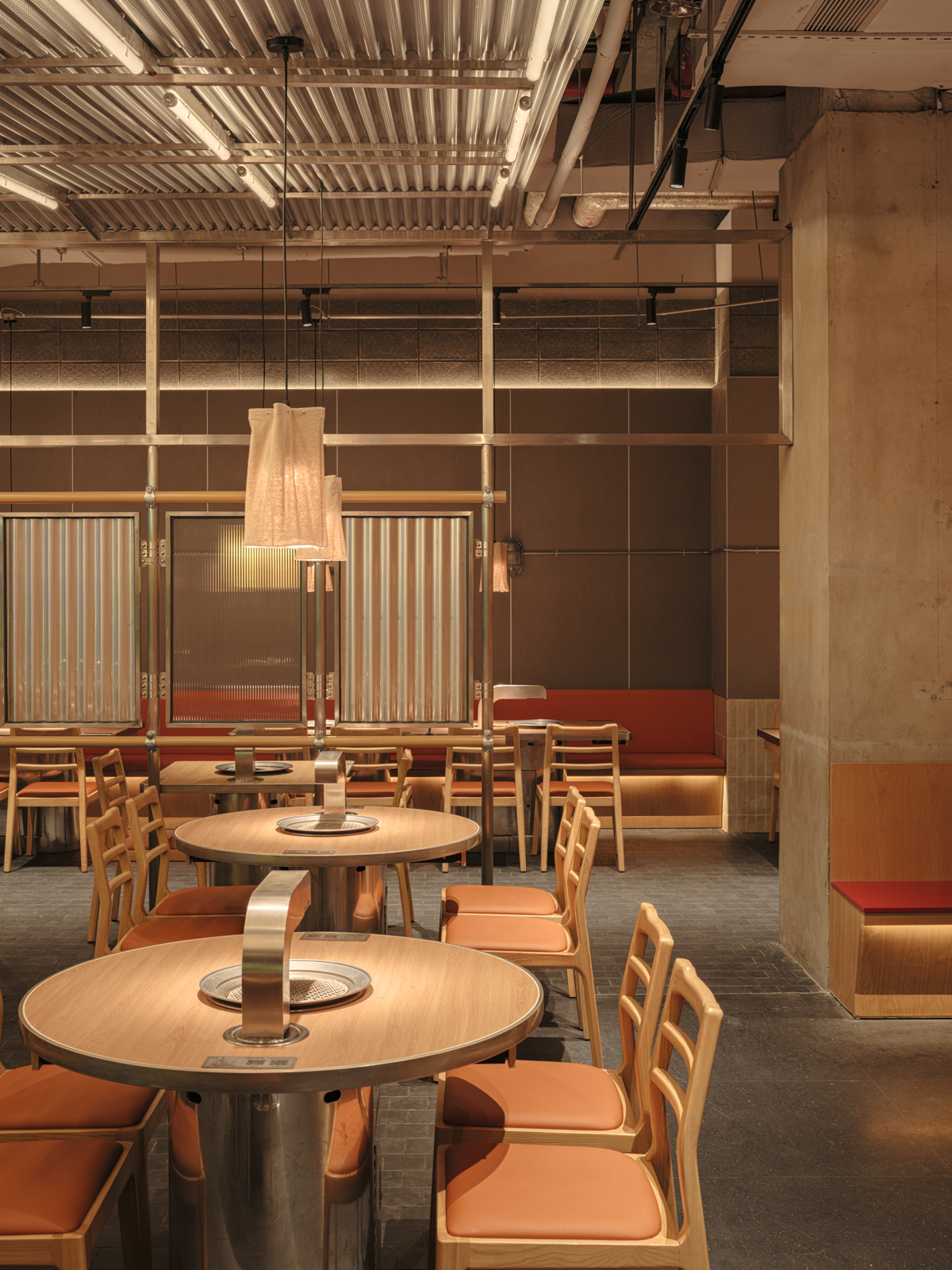
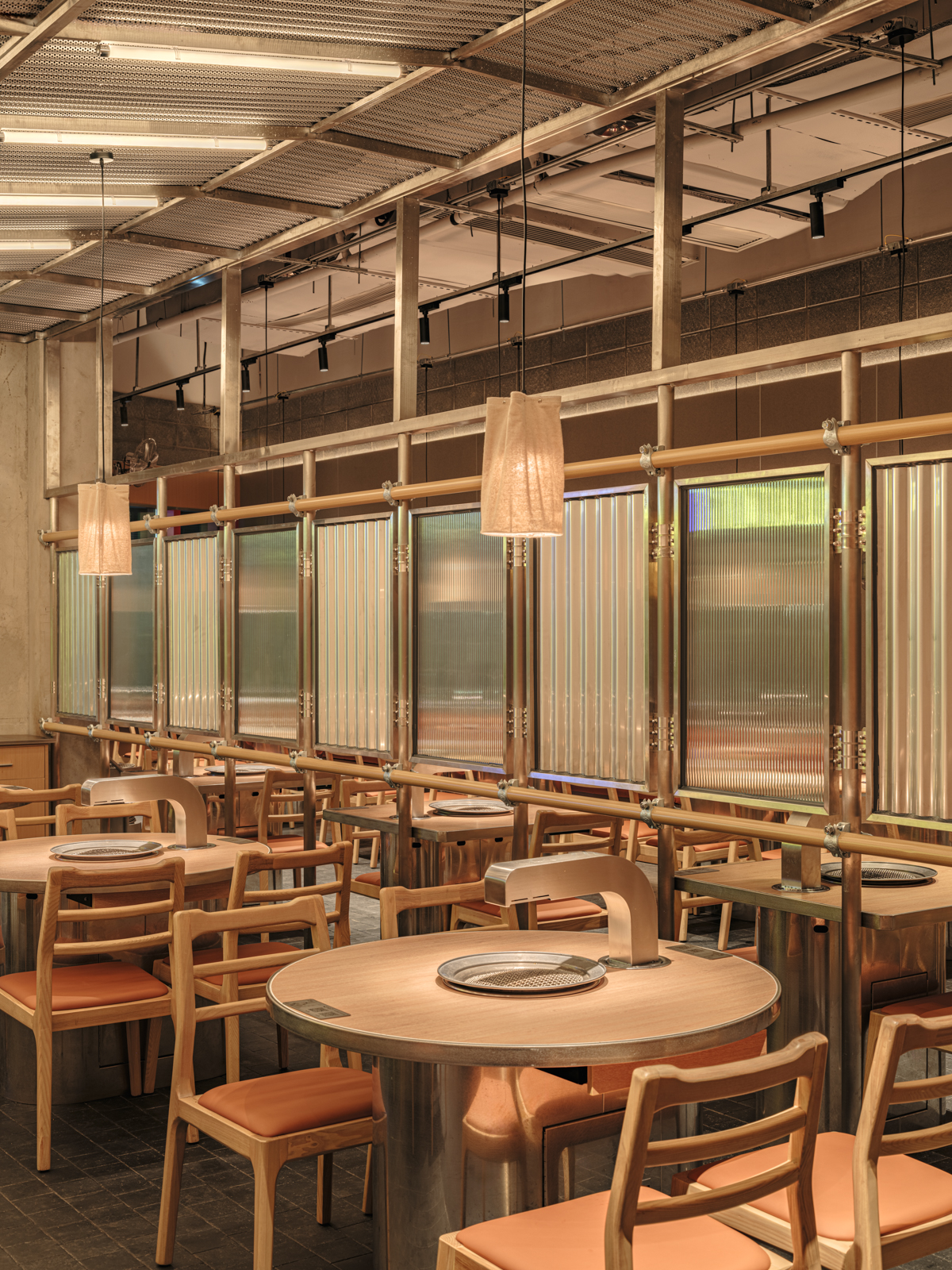
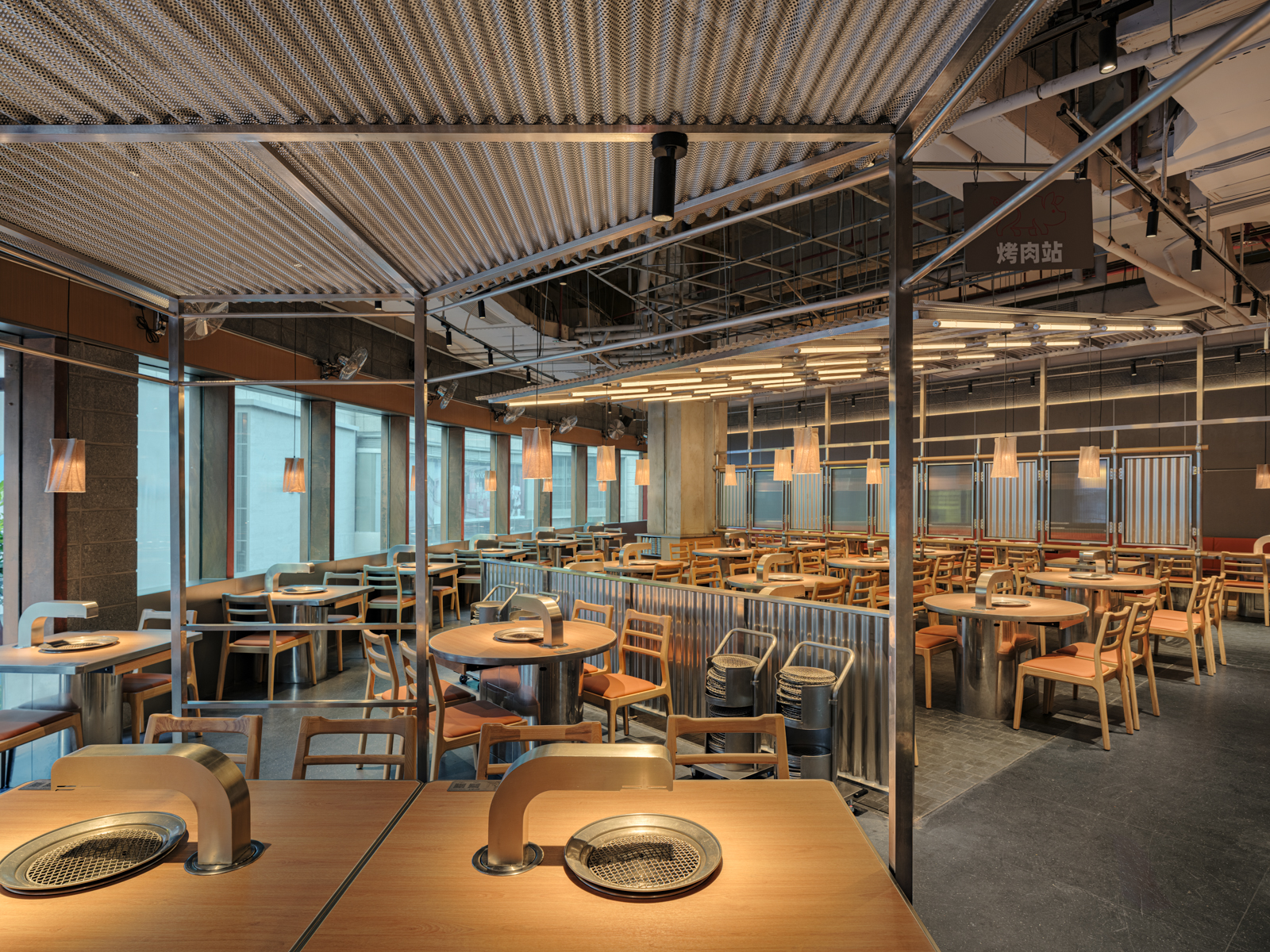
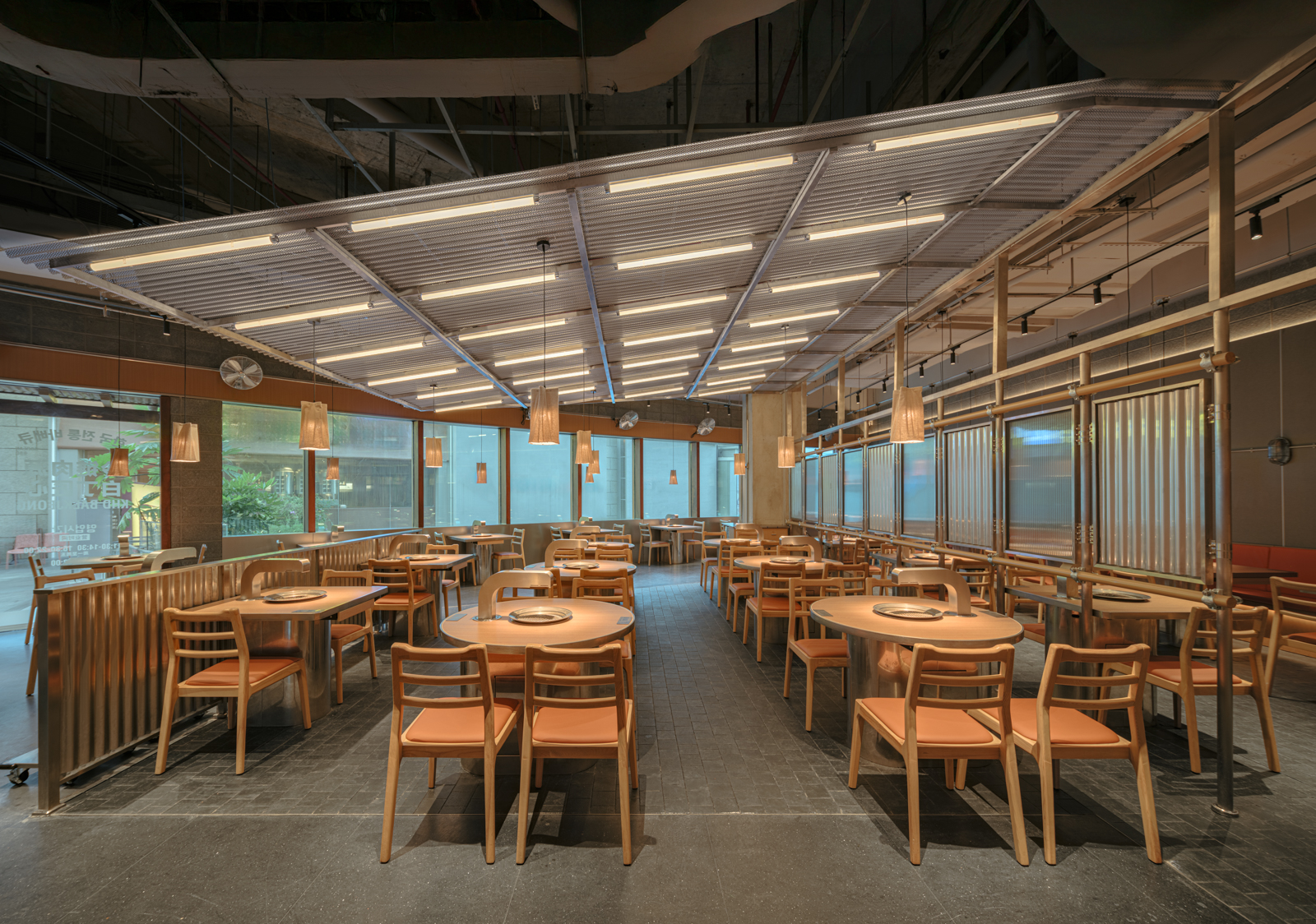
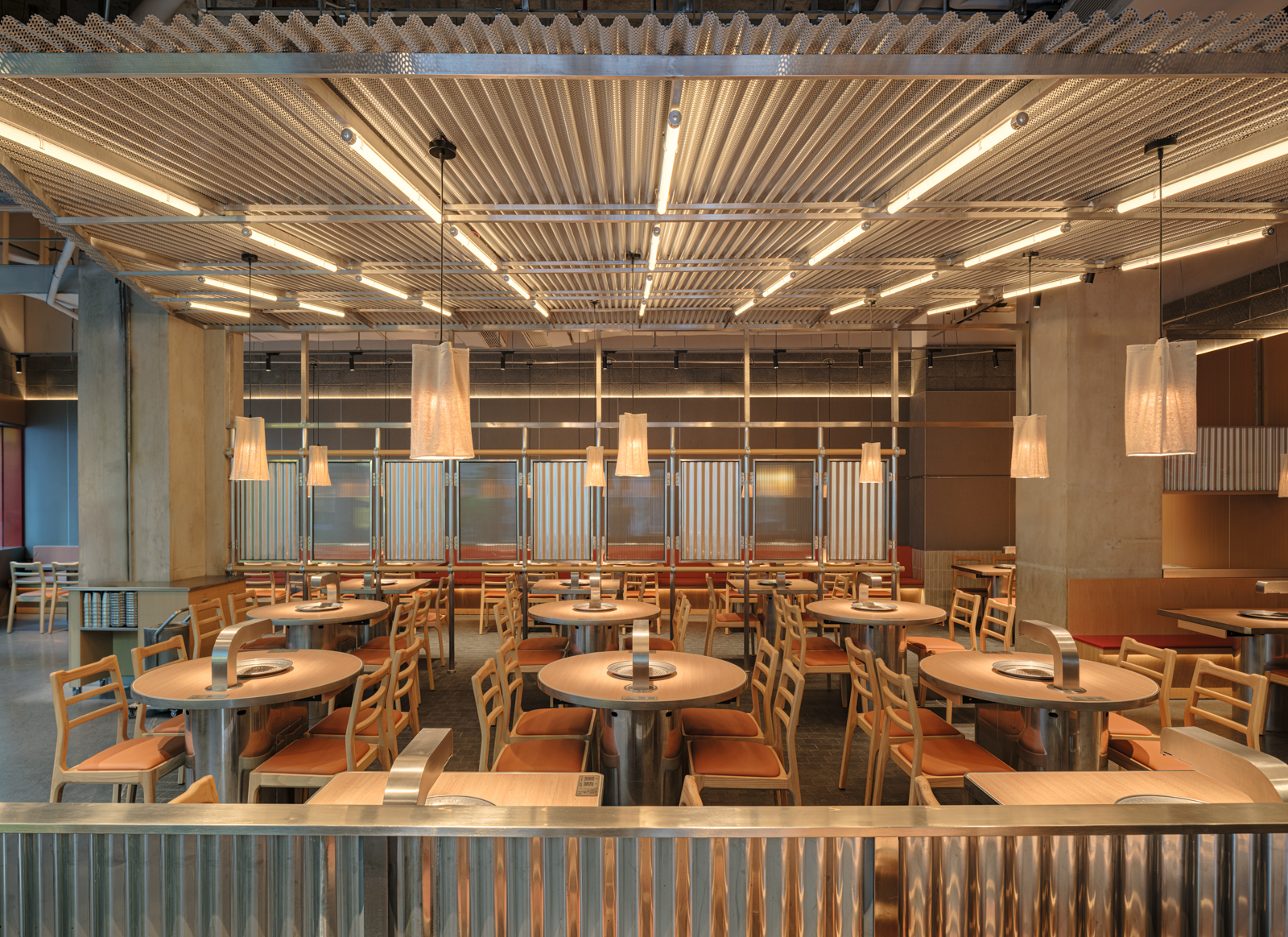
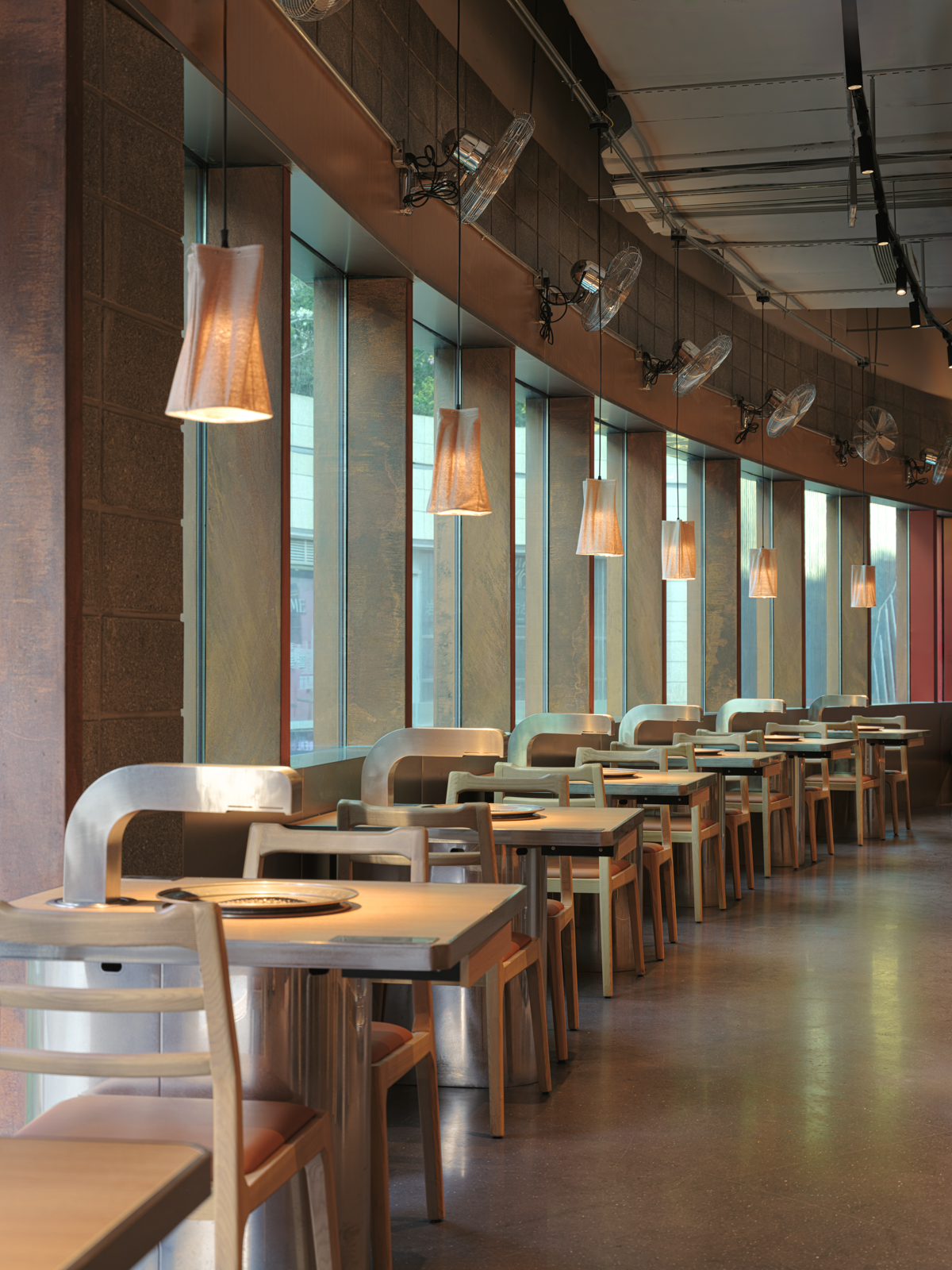
这次姜虎东烤肉的老店改造,并不是要把原来的状态推翻重来,而是顺着它原本的气质,把空间重新整理到一个更舒服的位置。设计从街头出发,借用人们早已习惯的空间逻辑:材料不必精致,结构可以被看见,很多东西就像是自然搭起来的。用餐被放回一种更开放、更接近城市日常的状态,像是在广场、街边,或临时搭起的棚子下面吃饭。
商业不被过度修饰,秩序与随意并存,新的介入被控制在恰当的尺度之内,让市井本身成为空间中最重要的主角。
这次姜虎东烤肉的老店改造,并不是要把原来的状态推翻重来,而是顺着它原本的气质,把空间重新整理到一个更舒服的位置。设计从街头出发,借用人们早已习惯的空间逻辑:材料不必精致,结构可以被看见,很多东西就像是自然搭起来的。用餐被放回一种更开放、更接近城市日常的状态,像是在广场、街边,或临时搭起的棚子下面吃饭。
商业不被过度修饰,秩序与随意并存,新的介入被控制在恰当的尺度之内,让市井本身成为空间中最重要的主角。
At amass, we are interested in spatial experiences shaped by repeated everyday use. Rather than simply “making something new,” we care more about whether a place can withstand daily life and whether people feel comfortable staying there.
This renovation of the long-standing Baekjeong KBBQ restaurant was not intended to overturn the existing condition, but to follow its original character and reorganize the space into a more comfortable state. The design draws inspiration from the street, borrowing spatial logics that people are already familiar with: materials do not need to be overly refined, structures can remain visible, and many elements appear as if they were naturally assembled. Dining returns to a more open condition, closer to the rhythms of urban life—like eating in a plaza, on the street, or beneath a temporary canopy.
Commerce is not overly polished. Order and spontaneity coexist, while new interventions are carefully controlled in scale, allowing the everyday vitality of the street to become the true protagonist of the space.
This renovation of the long-standing Baekjeong KBBQ restaurant was not intended to overturn the existing condition, but to follow its original character and reorganize the space into a more comfortable state. The design draws inspiration from the street, borrowing spatial logics that people are already familiar with: materials do not need to be overly refined, structures can remain visible, and many elements appear as if they were naturally assembled. Dining returns to a more open condition, closer to the rhythms of urban life—like eating in a plaza, on the street, or beneath a temporary canopy.
Commerce is not overly polished. Order and spontaneity coexist, while new interventions are carefully controlled in scale, allowing the everyday vitality of the street to become the true protagonist of the space.