LANGUAGE SWITCHER
kaitoumi
开头米
2025
#133

项目:开头米
地址:成都Cypark
类型:室内设计
面积:150m²
年份:2026
摄影:郭新新
Project: Kaitoumi
Location: Chengdu Cypark
Type:Interior Design
Area:150m²
Year:2026
Photography:Guoxinxin
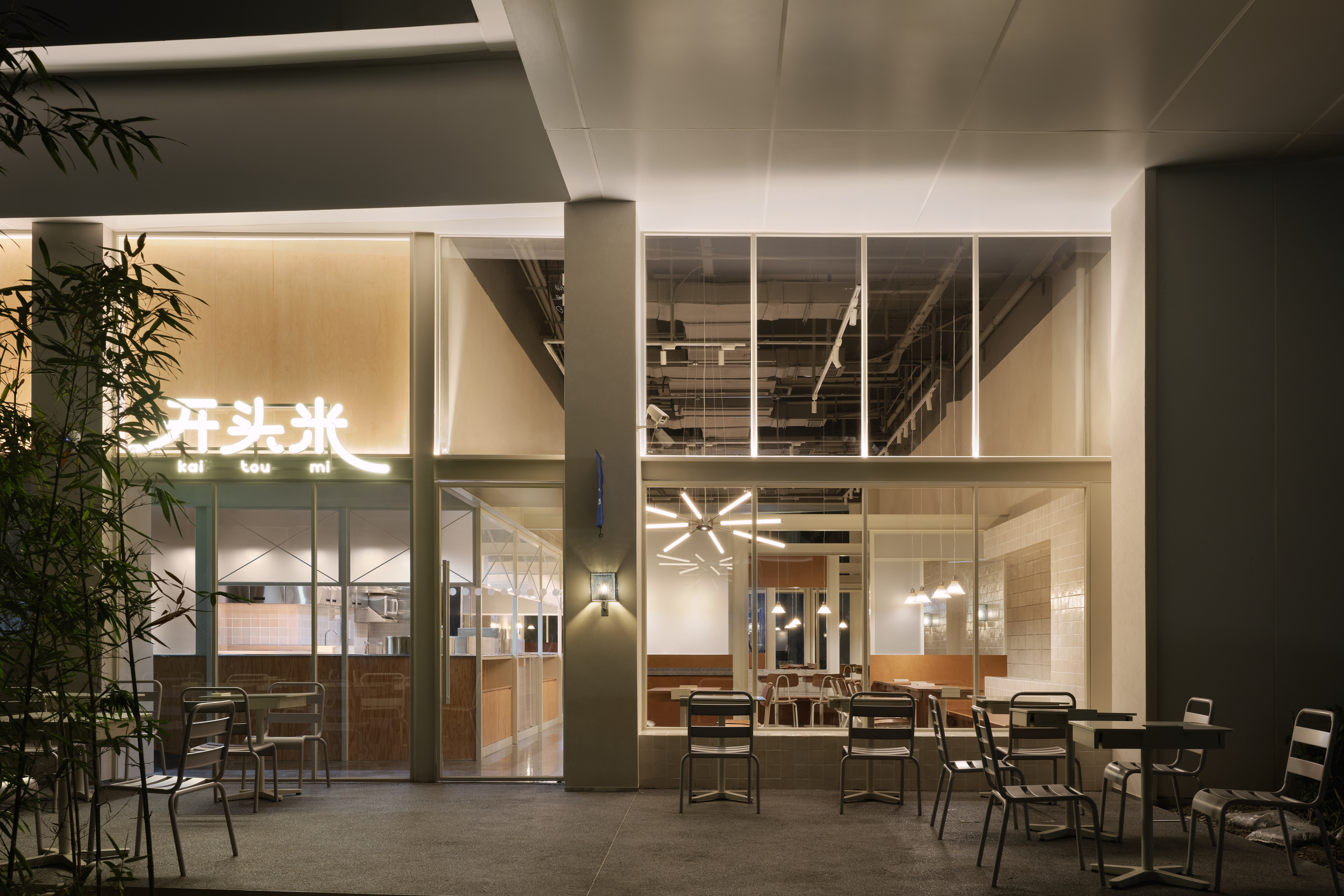
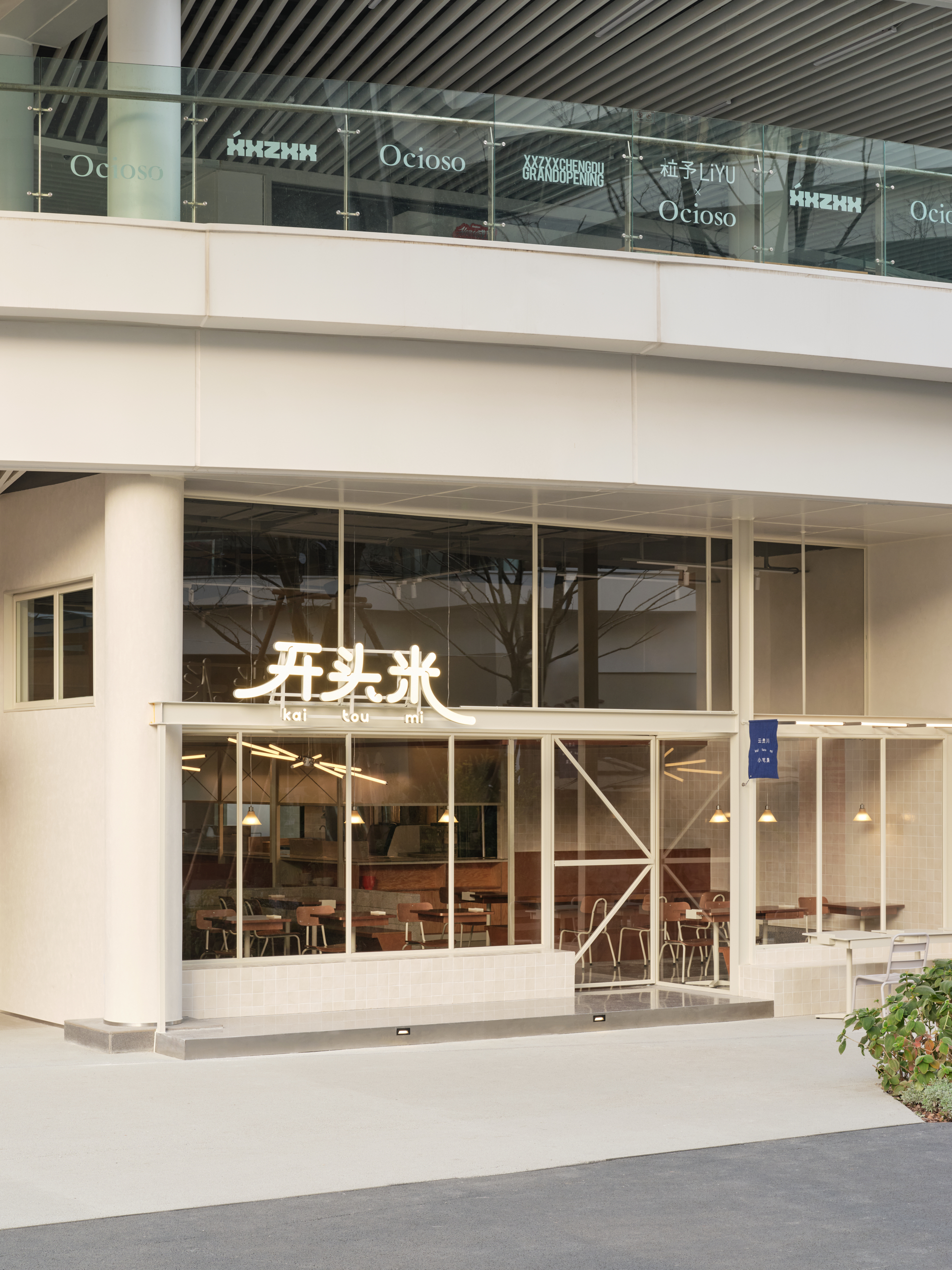
开头米是一家做云贵川小吃的餐厅。
小吃本身是街头的,是即时的,也是常常被忽略的,这种食物形式正在被越来越多的人认真对待。
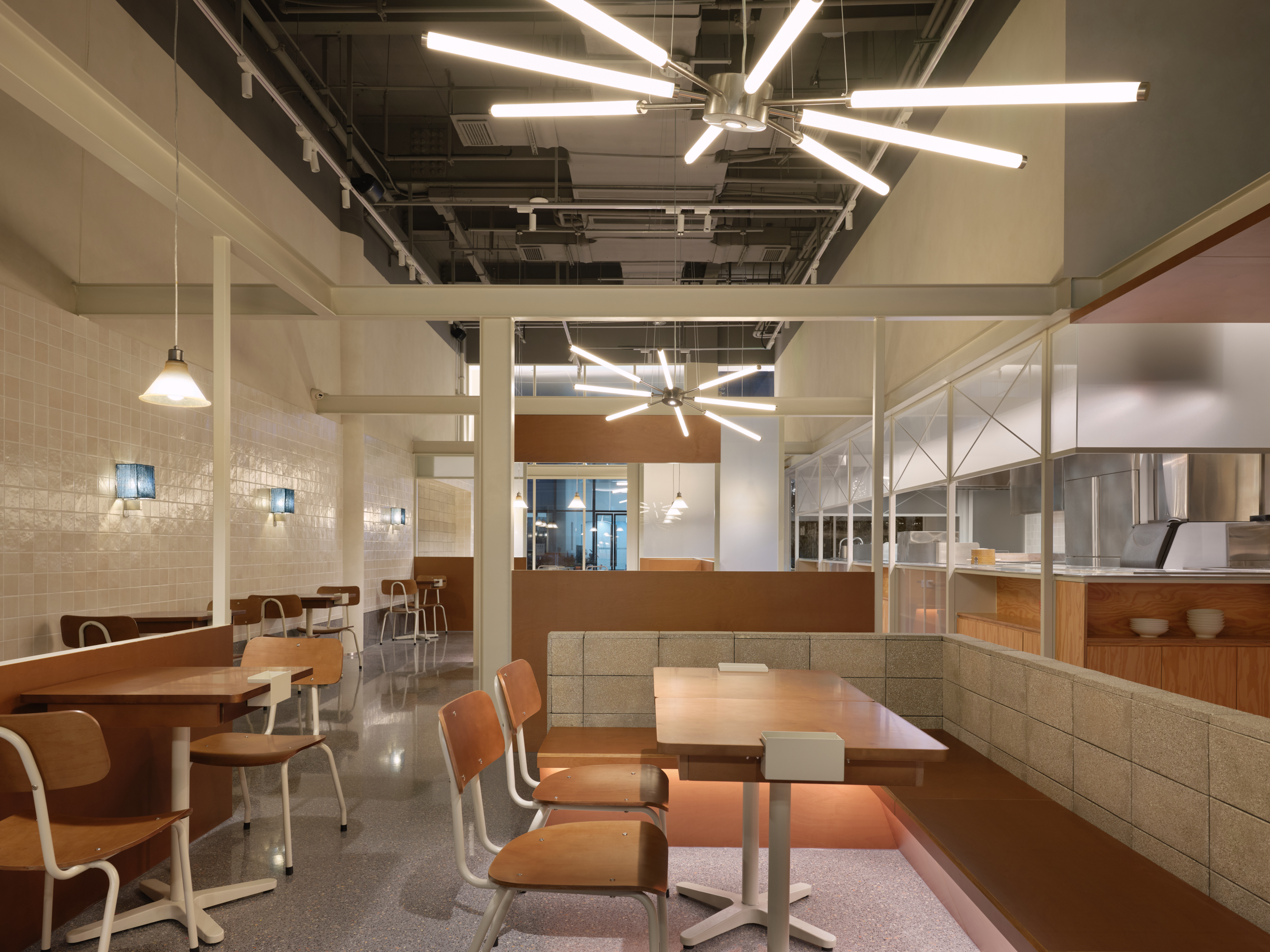
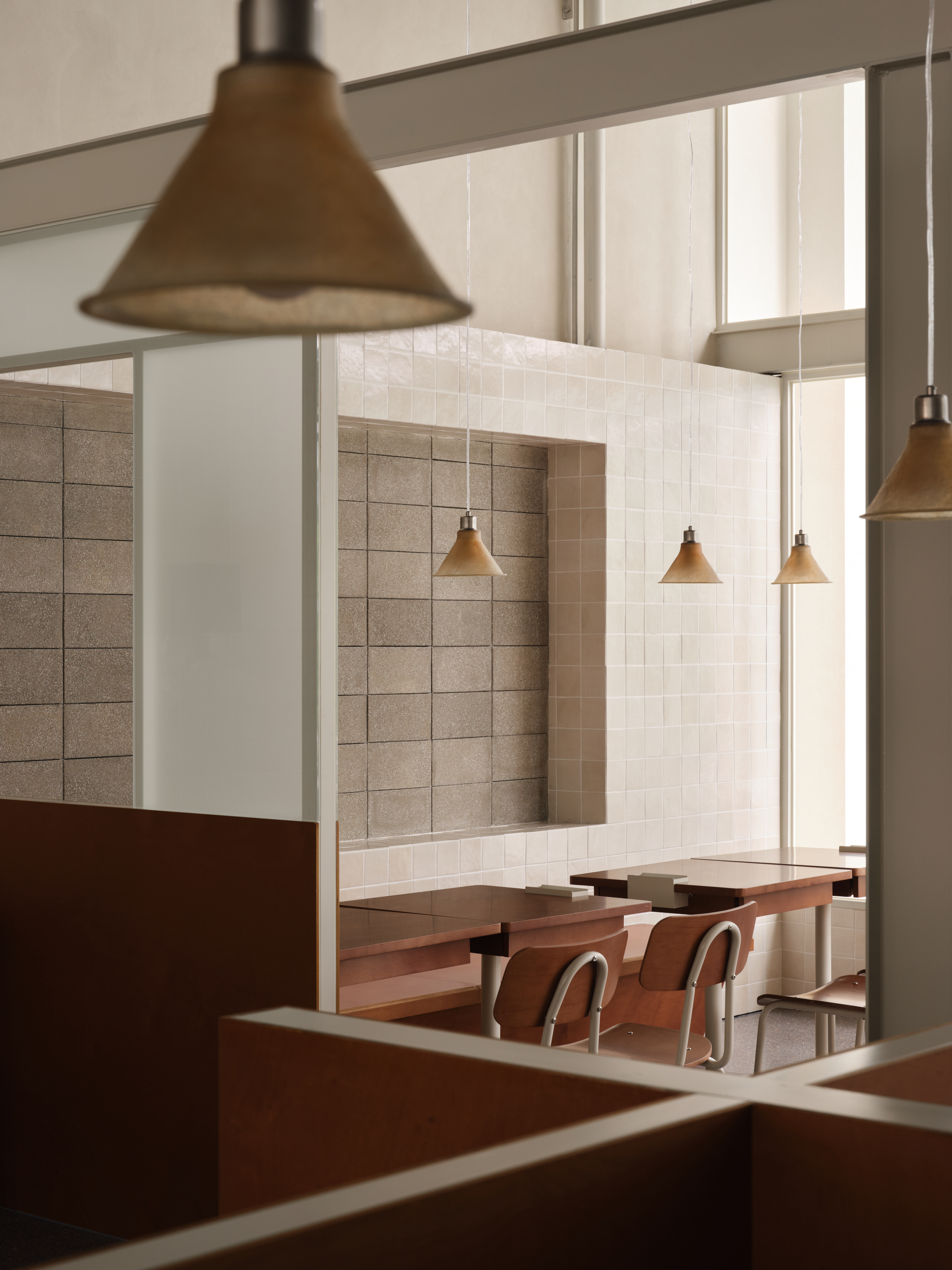
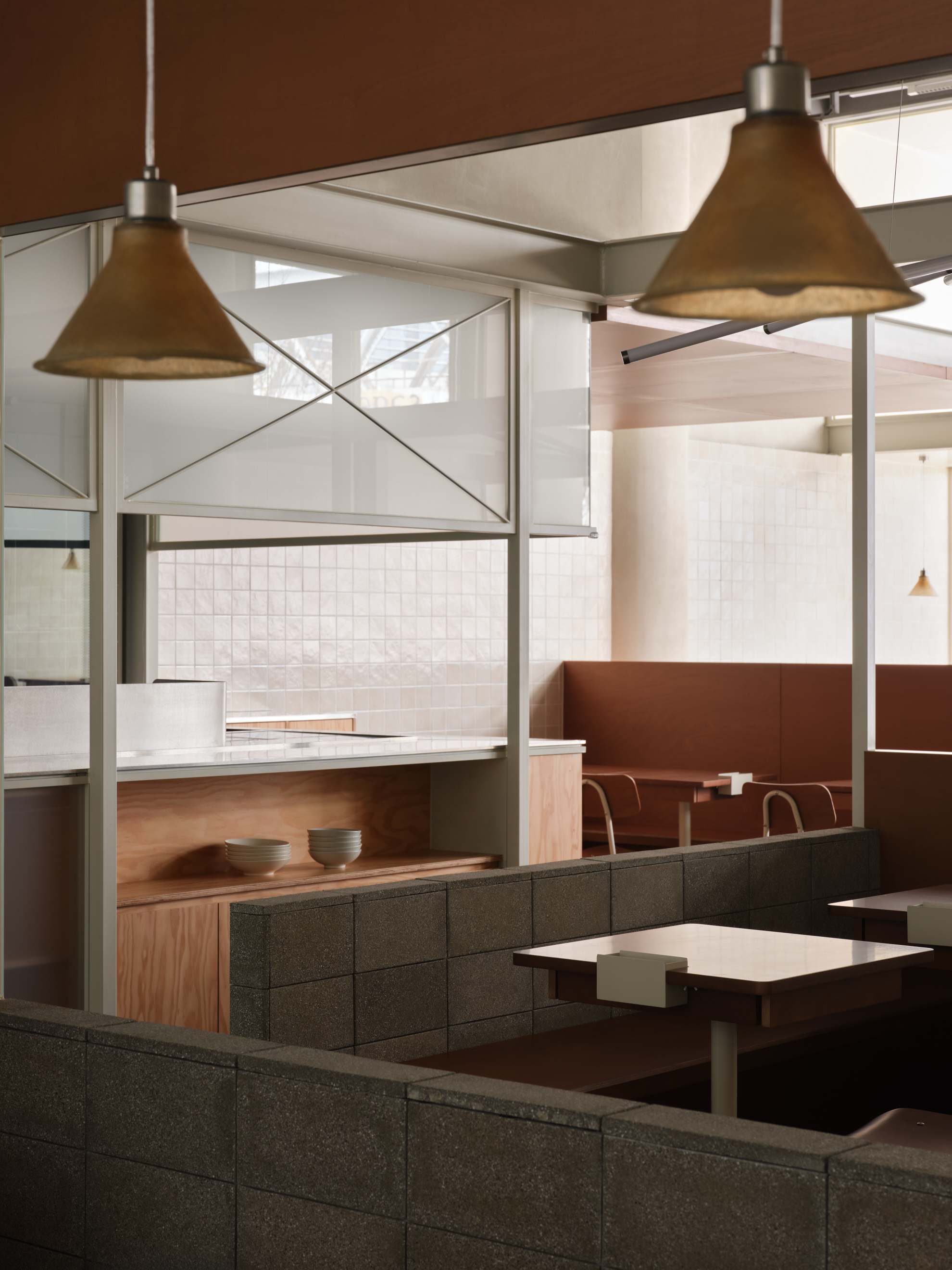
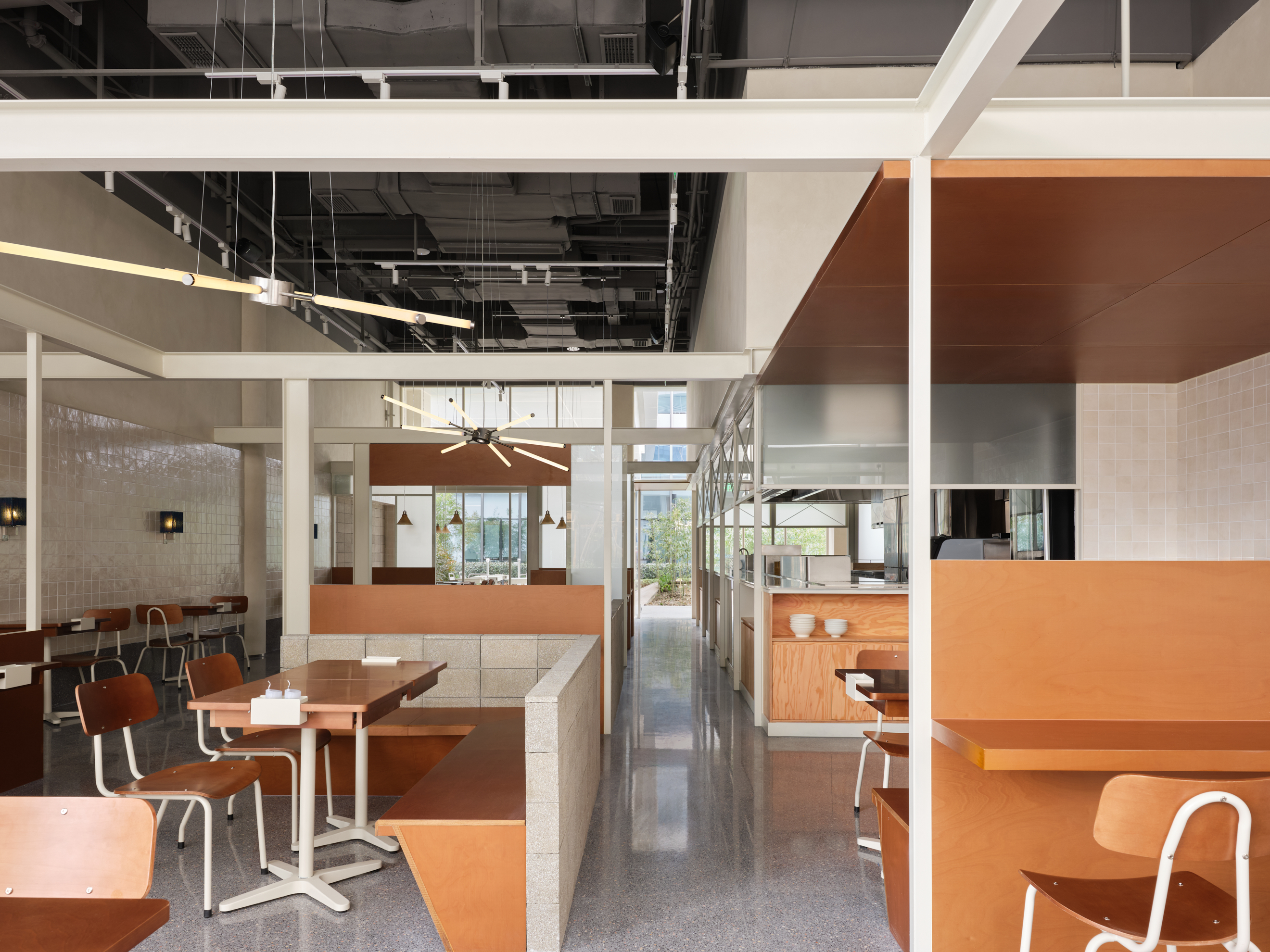
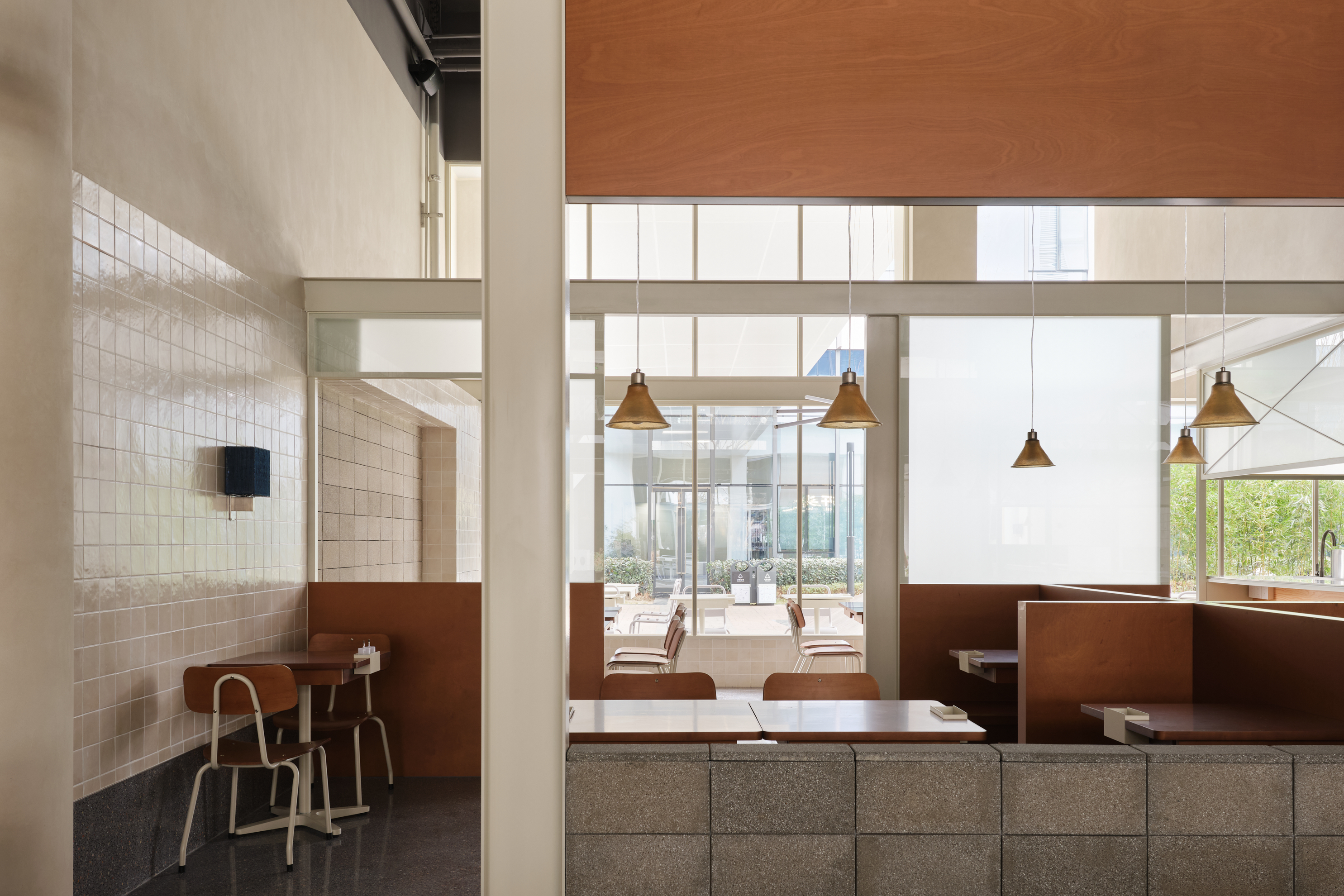
走进这个空间,会有一点像拐进一条巷巷头,我们尝试用现代的结构语言去表达街巷的感觉。H型钢横梁划分出空间的节奏,在其之下通过立柱、定制水泥砖矮墙和通透的隔断,形成开放却有围合的界面。人在其中穿行,既能看到尽头,也会在转角处停下来。
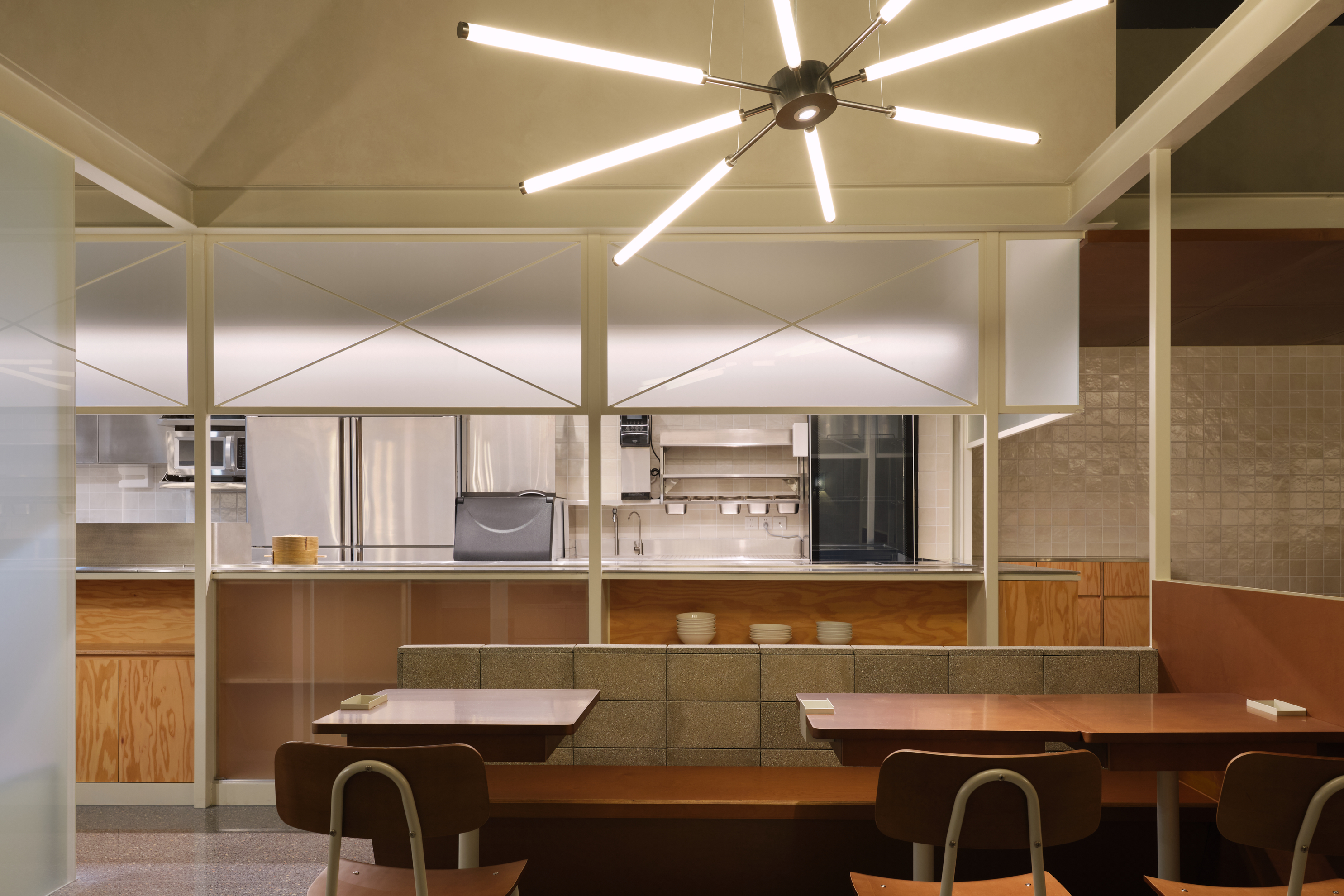
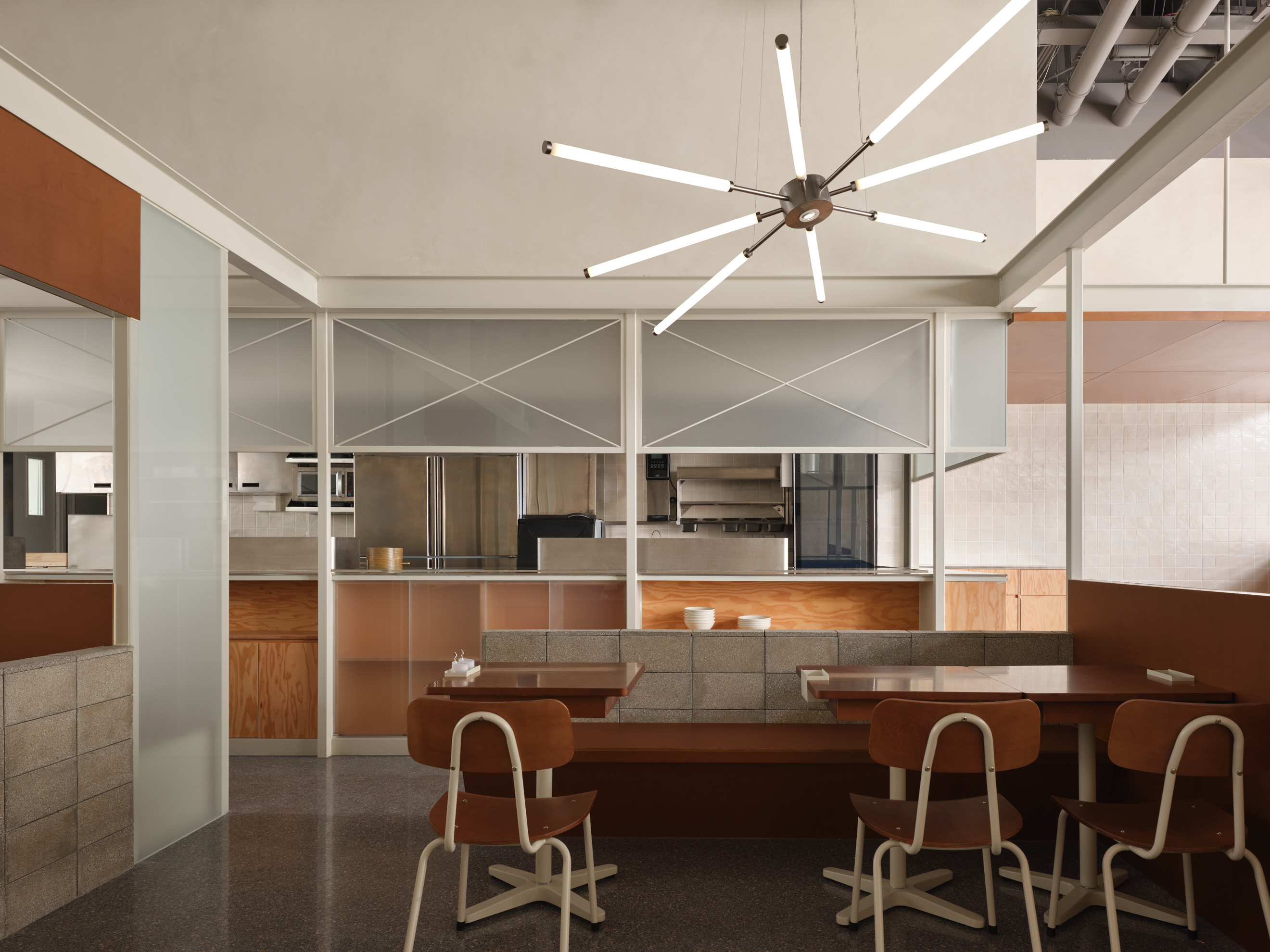
明档厨房成为空间的一部分,烹饪被看见,公共与个人、制作与用餐的界限被打破,小吃的热闹与现场属性也被保留了下来。
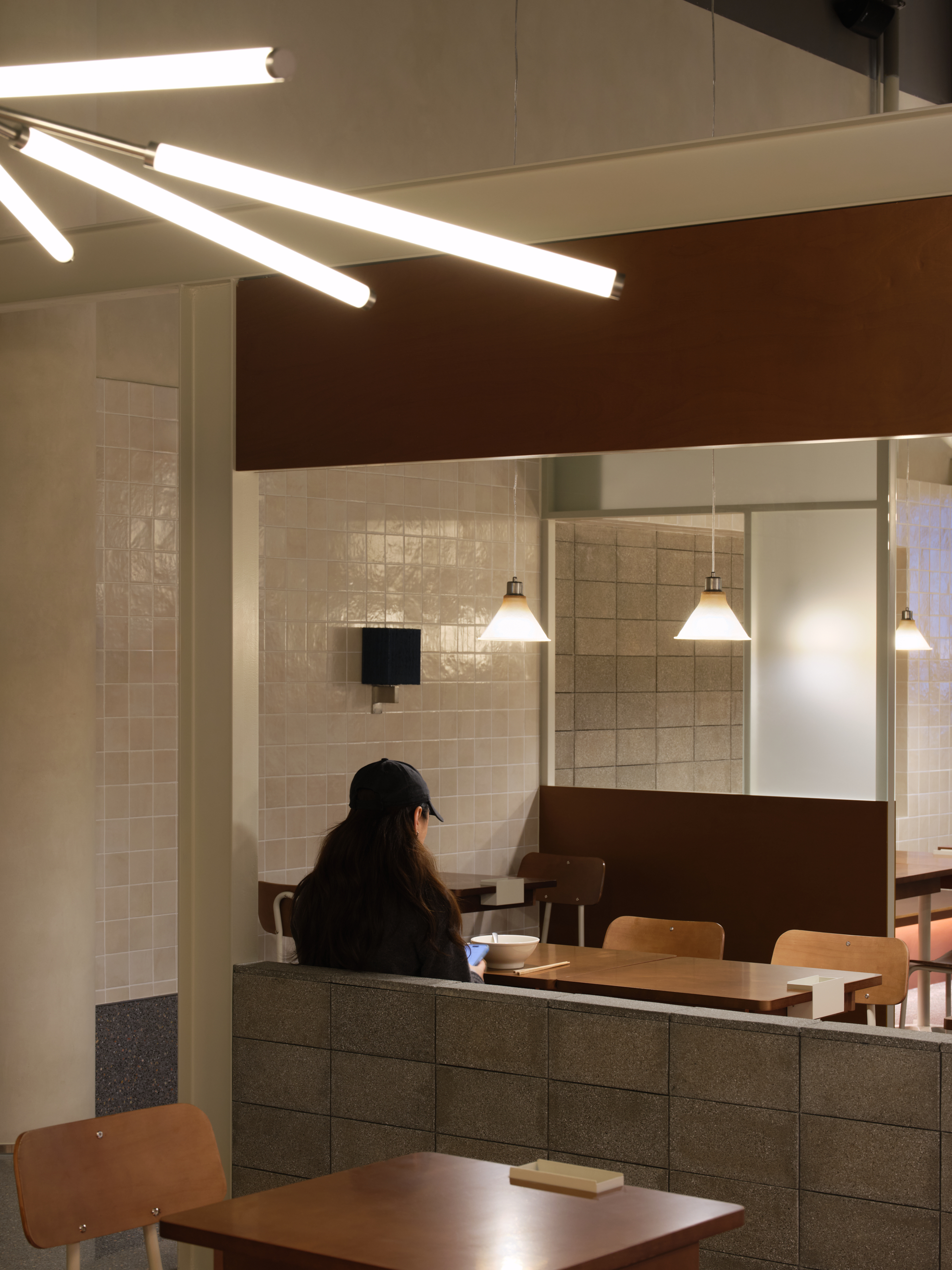
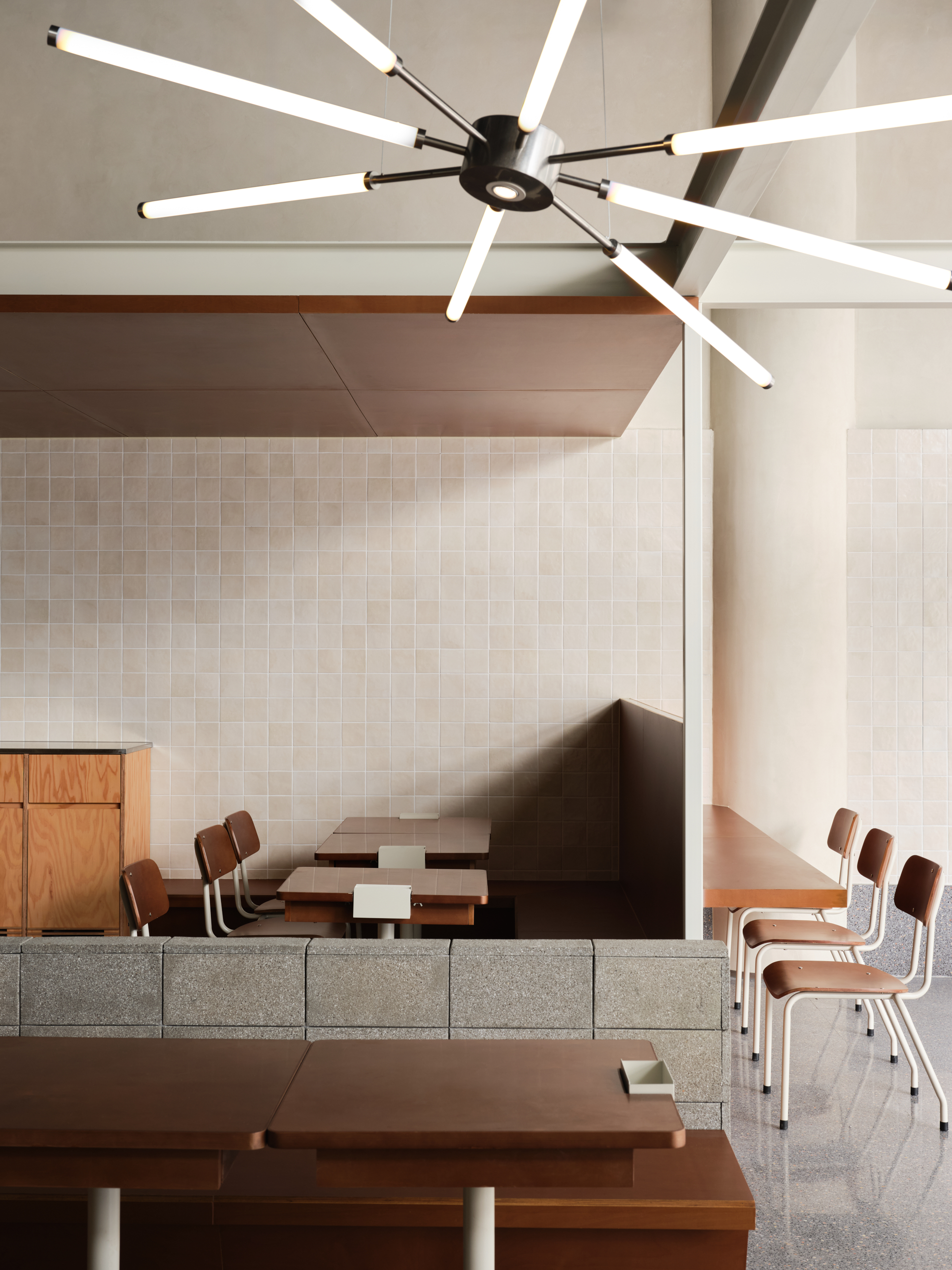
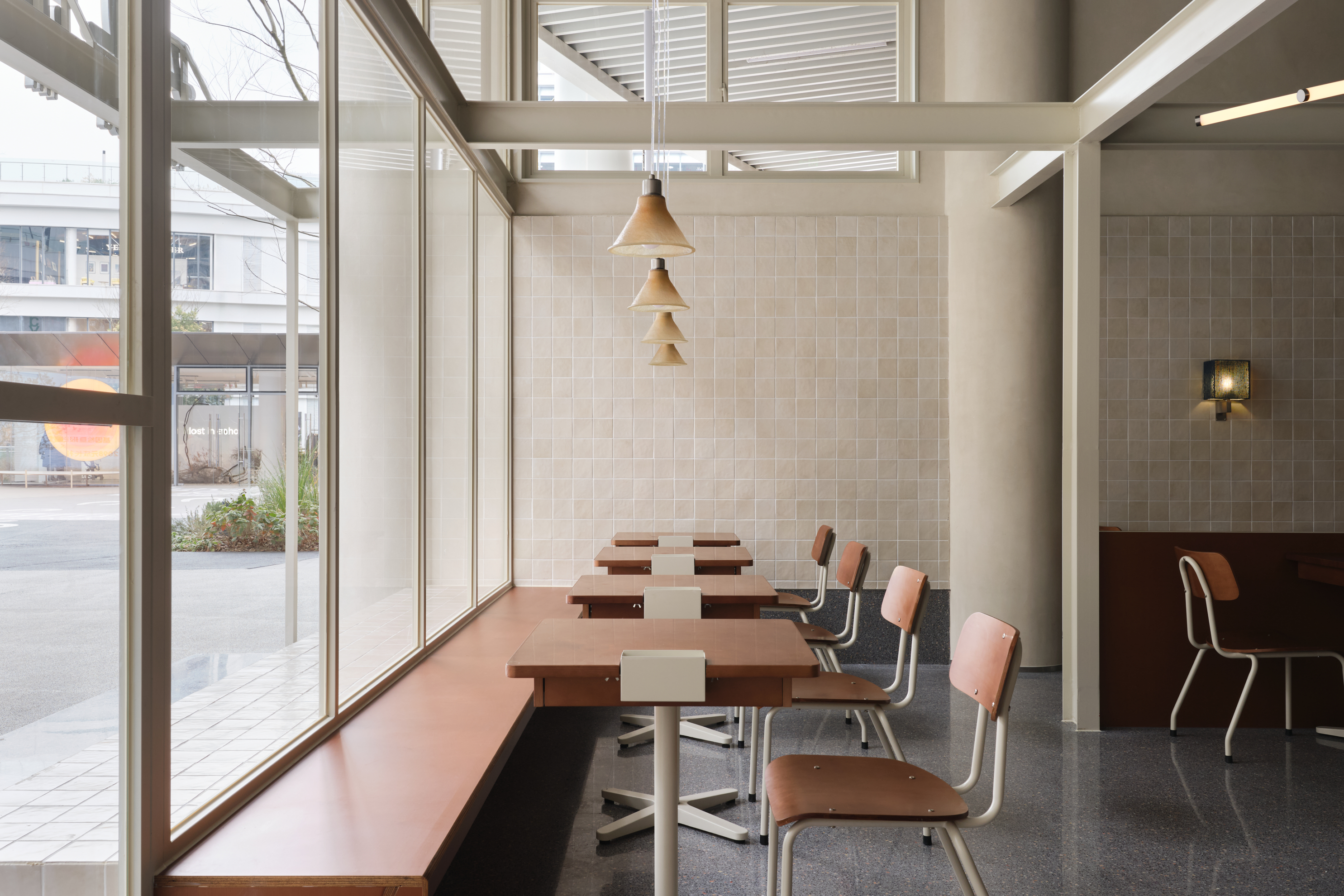
空间的材料延续了街头朴实而耐久的语言,水磨石从地面延伸到墙面,墙裙方砖与水泥砖矮墙共同构成空间的基础。这些日常材料不过度修饰,强调真实与长期使用的可能。
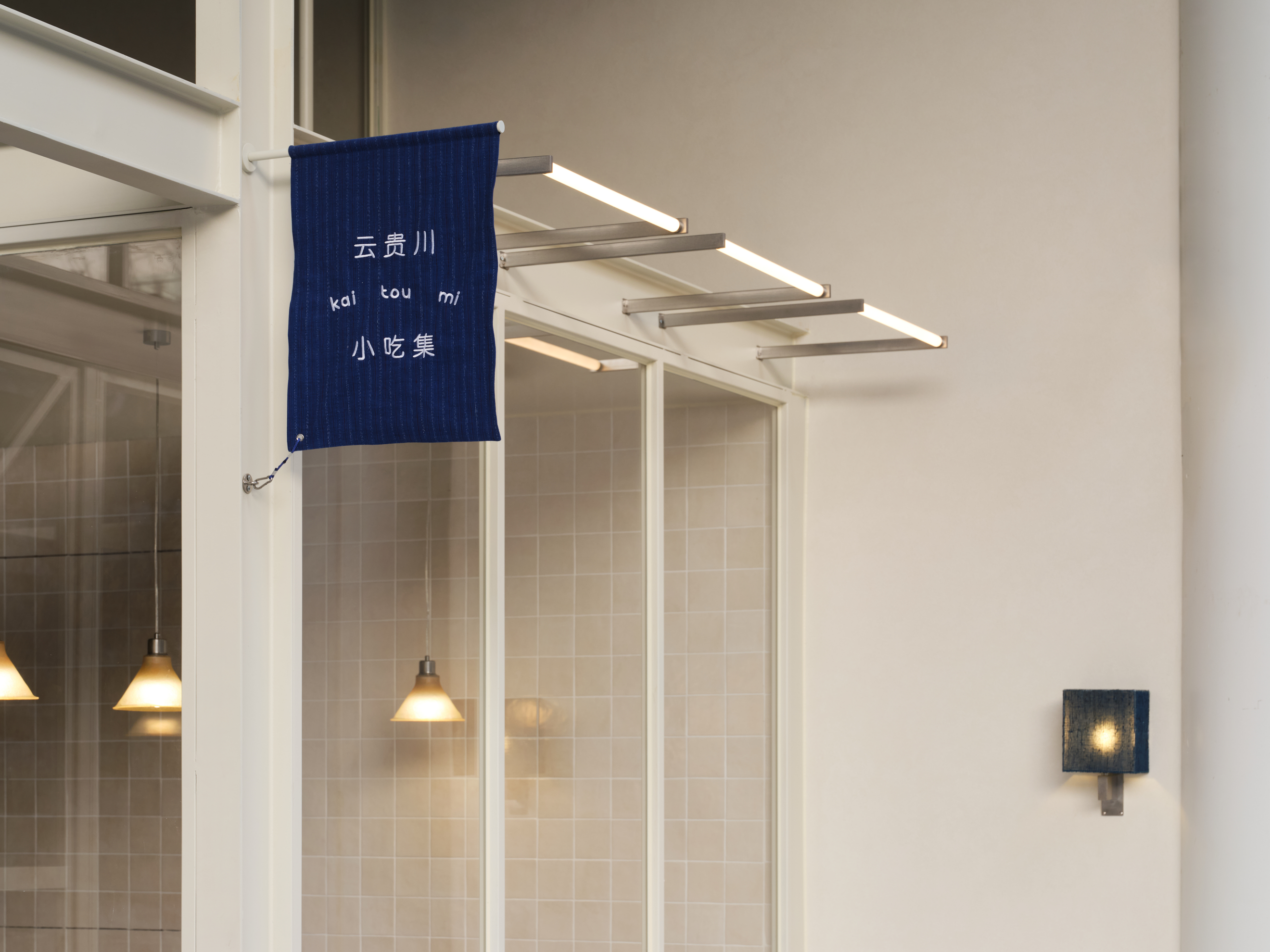
顶面的“米”字型吊灯的设计灵感来自品牌开头米的米字,定制的玻璃钢灯罩带来半透的柔和光感,蓝色植物染苎麻布壁灯为空间加入一抹克制的西南色彩。
在这里,小吃被认真对待,也被看见,它不张扬,却稳定地存在着,像每天准时开张的一顿饭,日常,也值得认真。
小吃本身是街头的,是即时的,也是常常被忽略的,这种食物形式正在被越来越多的人认真对待。
走进这个空间,会有一点像拐进一条巷巷头,我们尝试用现代的结构语言去表达街巷的感觉。H型钢横梁划分出空间的节奏,在其之下通过立柱、定制水泥砖矮墙和通透的隔断,形成开放却有围合的界面。人在其中穿行,既能看到尽头,也会在转角处停下来。
明档厨房成为空间的一部分,烹饪被看见,公共与个人、制作与用餐的界限被打破,小吃的热闹与现场属性也被保留了下来。
空间的材料延续了街头朴实而耐久的语言,水磨石从地面延伸到墙面,墙裙方砖与水泥砖矮墙共同构成空间的基础。这些日常材料不过度修饰,强调真实与长期使用的可能。
顶面的“米”字型吊灯的设计灵感来自品牌开头米的米字,定制的玻璃钢灯罩带来半透的柔和光感,蓝色植物染苎麻布壁灯为空间加入一抹克制的西南色彩。
在这里,小吃被认真对待,也被看见,它不张扬,却稳定地存在着,像每天准时开张的一顿饭,日常,也值得认真。
Kaitoumi is a restaurant specializing in snacks from Yunnan, Guizhou, and Sichuan.
Snacks are inherently street-based, immediate, and often overlooked. Yet this form of food is increasingly being taken seriously.
Entering the space feels somewhat like turning into a narrow alley. We attempted to express the atmosphere of a street lane through a contemporary structural language. H-shaped steel beams articulate the rhythm of the space, and beneath them, columns, custom cement-brick low walls, and translucent partitions create boundaries that are open yet defined. As people move through the space, they can see the end ahead, while also pausing at corners along the way.
The open kitchen becomes part of the spatial composition. Cooking is made visible, dissolving the boundaries between public and private, preparation and dining, while preserving the liveliness and immediacy inherent to street food.
The material palette continues the honest and durable language of the street. Terrazzo extends from floor to wall, while square wall tiles and cement-brick low walls form the foundation of the space. These everyday materials are left largely unembellished, emphasizing authenticity and long-term use.
The “Mi”-shaped ceiling light draws inspiration from the character 米 in the brand name Kaitoumi. Custom fiberglass shades produce a softly diffused glow, while blue plant-dyed ramie wall lamps introduce a restrained touch of Southwestern color to the space.
Here, snacks are treated with care and made visible. They are not ostentatious, yet they exist steadily — like a meal that opens on time every day: ordinary, yet worthy of attention.
Snacks are inherently street-based, immediate, and often overlooked. Yet this form of food is increasingly being taken seriously.
Entering the space feels somewhat like turning into a narrow alley. We attempted to express the atmosphere of a street lane through a contemporary structural language. H-shaped steel beams articulate the rhythm of the space, and beneath them, columns, custom cement-brick low walls, and translucent partitions create boundaries that are open yet defined. As people move through the space, they can see the end ahead, while also pausing at corners along the way.
The open kitchen becomes part of the spatial composition. Cooking is made visible, dissolving the boundaries between public and private, preparation and dining, while preserving the liveliness and immediacy inherent to street food.
The material palette continues the honest and durable language of the street. Terrazzo extends from floor to wall, while square wall tiles and cement-brick low walls form the foundation of the space. These everyday materials are left largely unembellished, emphasizing authenticity and long-term use.
The “Mi”-shaped ceiling light draws inspiration from the character 米 in the brand name Kaitoumi. Custom fiberglass shades produce a softly diffused glow, while blue plant-dyed ramie wall lamps introduce a restrained touch of Southwestern color to the space.
Here, snacks are treated with care and made visible. They are not ostentatious, yet they exist steadily — like a meal that opens on time every day: ordinary, yet worthy of attention.